Sydney’s $3bn tech hub dream scrapped for student housing project

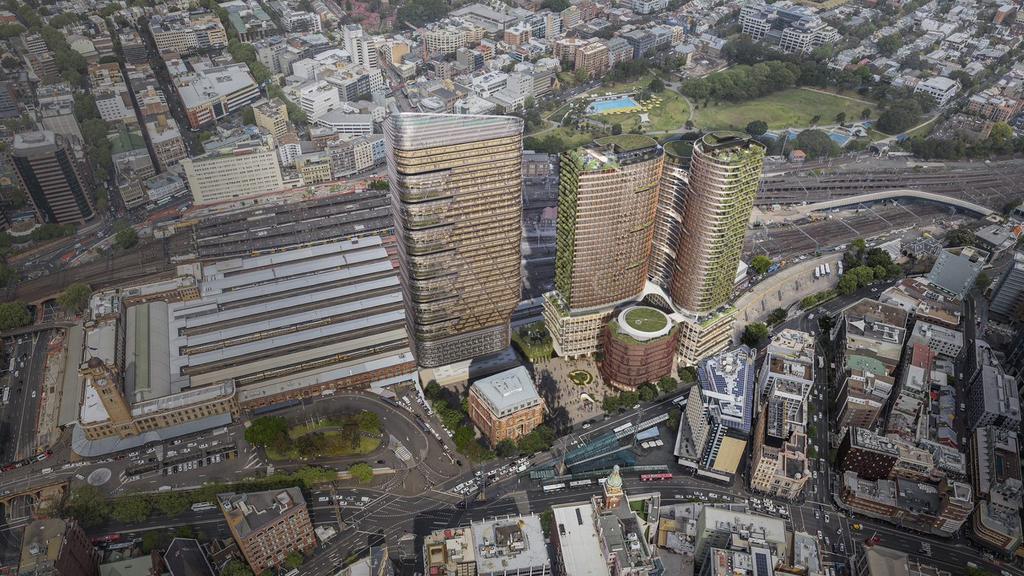
Dexus and Frasers have dumped plans for the $3bn Central Place Sydney in the tech precinct adjacent to Sydney’s Central Station.
Hopes of a large-scale tech precinct next to Sydney’s Central Station have taken a blow as a $3bn office development designed to house next generation companies is replaced with plans for student housing.
The scaled back vision will mean two buildings are repurposed for “co-living” instead of being demolished to make way for a new tower that was to complement Atlassian’s headquarters.
When the scheme first launched in 2022 as a joint venture between Frasers Property Australia and Dexus, the Central Place Sydney project was pitched as a hub for local technology companies.
But not enough large tenants were recruited to take up space, leaving its proponents to quietly abandon the project amid what are still tough leasing conditions in less desirable parts of major cities.
The pair had planned a landmark project that would span more than 130,000sq m of office space, making it the largest premium-grade workplace in the much hyped Tech Central precinct.
But that honour is likely to remain with software company Atlassian, which is developing a $1.8bn tower, also with Dexus. That 40-storey tower is rising rapidly even as the tech company has embraced remote working. The hunt is on for smaller tenants to fill up space.
Atlassian co-founder and chief executive Mike Cannon-Brookes in early 2025 welcomed a “refreshed” strategy from the NSW government for Sydney’s Tech Central innovation precinct, saying it will “breathe life” into the project.
“So many great tech companies have been born in Australia, but this journey is infinitely easier when you have a strong community around you. That’s why Atlassian is such a big supporter of Tech Central – the new home for our technology industry,” Mr Cannon-Brookes told The Australian. “A precinct without people is just buildings, it’s not a community.”
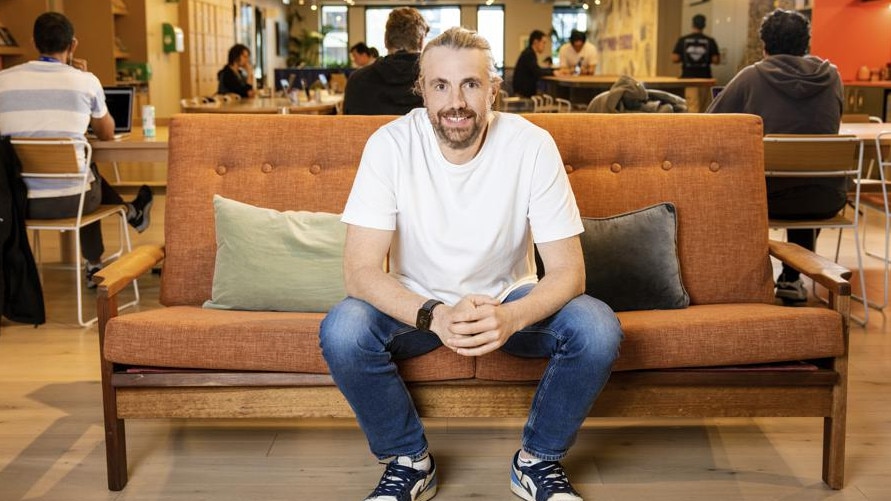
Atlassian boss Mike Cannon-Brookes.
But the area could take on a more residential flair as the strategy released in September indicated that more housing could be added to the Tech Central precinct, including the now dumped Central Place Sydney by Dexus and Frasers Property.
Another complex is to come by private developer Toga, which includes a hotel and offices, but winning a precommitment for that project may also be tough.
The existing strategy for the area had fallen “short of expectations” the NSW government strategy said. “There is a clear view that more should be done to help it grow as an innovation district, and as a precinct of global significance,” the document said.
But it flagged that more affordable homes could be built in the area, while also having enough space for “innovation-focused” tenants.
The part of the site that is controlled by Frasers is now slated for student accommodation, while Dexus is yet to comment on its own plans.
Frasers wants to redevelop the Henry Deane Plaza Building and Gateway Building for co-living housing, which will be used for student beds. The plan is to convert the towers into 554 rooms, comprising about 692 beds split between studios, twin studios, and cluster ‘share’ rooms. The project is timed to be finished alongside the adjoining Atlassian building.
The pre-existing buildings are about eight storeys and have been offices. But they have been vacant since 2022.
The overall precinct was downgraded in 2024, when the NSW government decided not to go ahead with an ambitious, but costly, over-station development, which was the key plank of a new broader central precinct that includes surrounding suburbs.
Frasers declined to comment but planning documents said its venture with Dexus had sought to market the proposed offices and sign pre-committed tenants to allow the building to kick off.
But it blamed the soft office market, which it said made the project unviable. By contrast, it said developing student space would provide a new use for the now vacant buildings and provide housing near universities.
Mr Cannon-Brookes, despite being a hybrid work evangelist rejects work-from-home mandates as an encroachment on the rights of businesses by government.
He once branded mandates “draconian” and has stuck to that mindset as Atlassian expands to 1000 staff in Jacinta Allan’s Victoria where the Labor government wants to legislate the right to work from home two days a week for private and public sector employees. This is widely opposed by business leaders on legal and ideological grounds.
“It’s not like you’re picking an AFL team for life,” Mr Cannon-Brookes said in November. “The entire work from home, remote work, distributed work, whatever we call it debate, I always find like it’s one people, media, both they want to polarise to the edges.”