Before digital ads: The chocolate blimp that became an Australian icon

Remember when the sky wasn’t just for planes, but for giant, yellow, chocolate-branded airships?
If you were in Australia between 1996 and 1999, chances are you do.
The Whitman’s Chocolates Lightship wasn’t just an advertising stunt; it was a floating marvel, a momentary distraction from the mundane, and for some, a genuine UFO sighting.
But beyond the nostalgia, this gentle giant of the skies offers a fascinating glimpse into a bygone era of marketing, a time before every scroll and click was a targeted ad.
The sky-high sensation
From September 1996 to 1999, a distinctive yellow airship, the Whitman’s Chocolates Lightship (registration VH-ZIC), became an unforgettable fixture in the Australian skyline. Operated by the Lightship Group, the 39-metre leviathan was a bold, million-dollar marketing gambit designed to herald the arrival of the iconic US confectionery brand, Whitman’s Chocolates, into the Australian market.
MORE NEW
$100bn ghost city’s shocking reality exposed
Foreign sites threaten Aus retailers
Dramatic blow for Gen Z’s favourite stationery brand
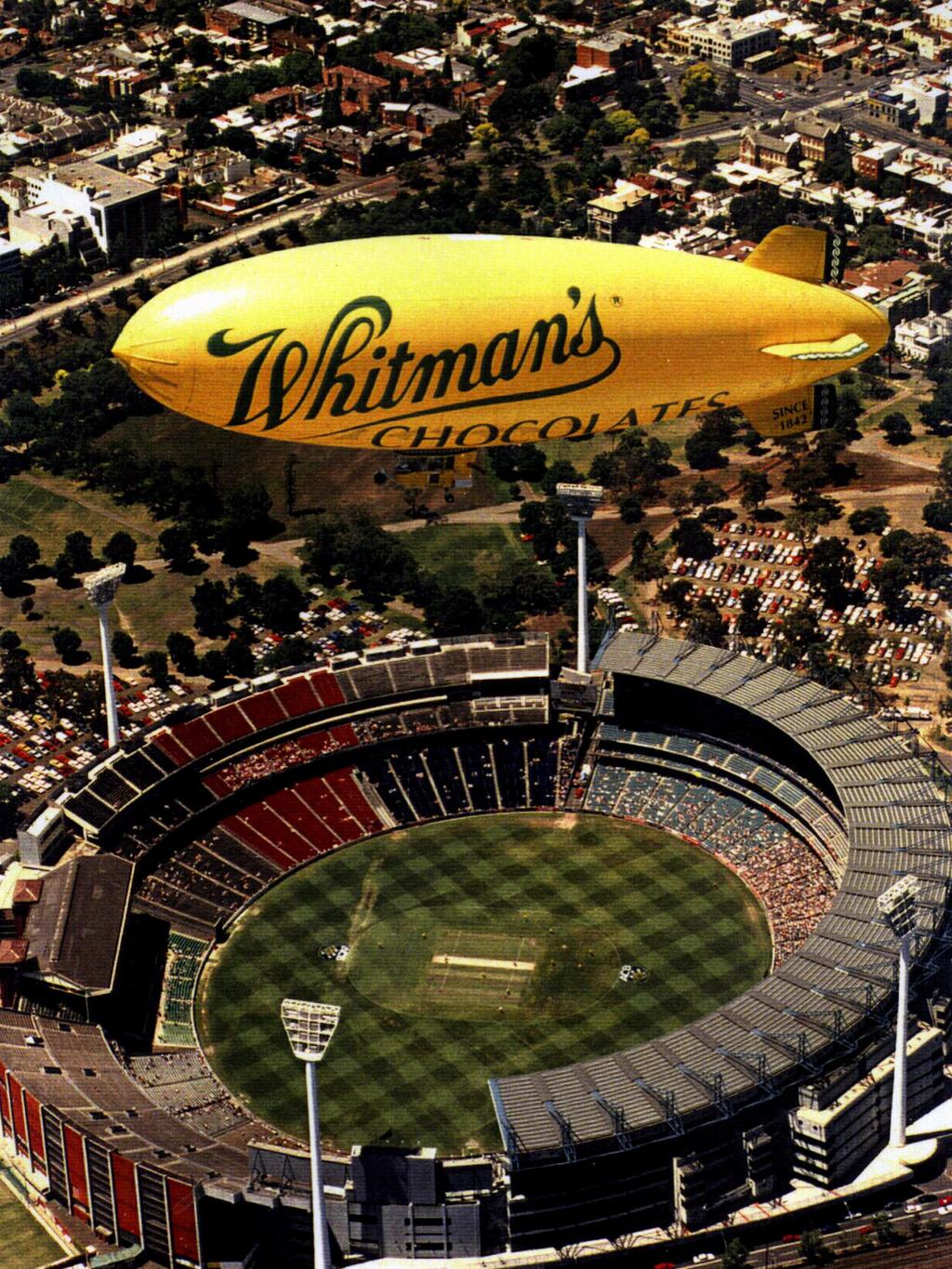
The Whitman’s Chocolates Lightship soars above Melbourne Cricket Ground in 1996.
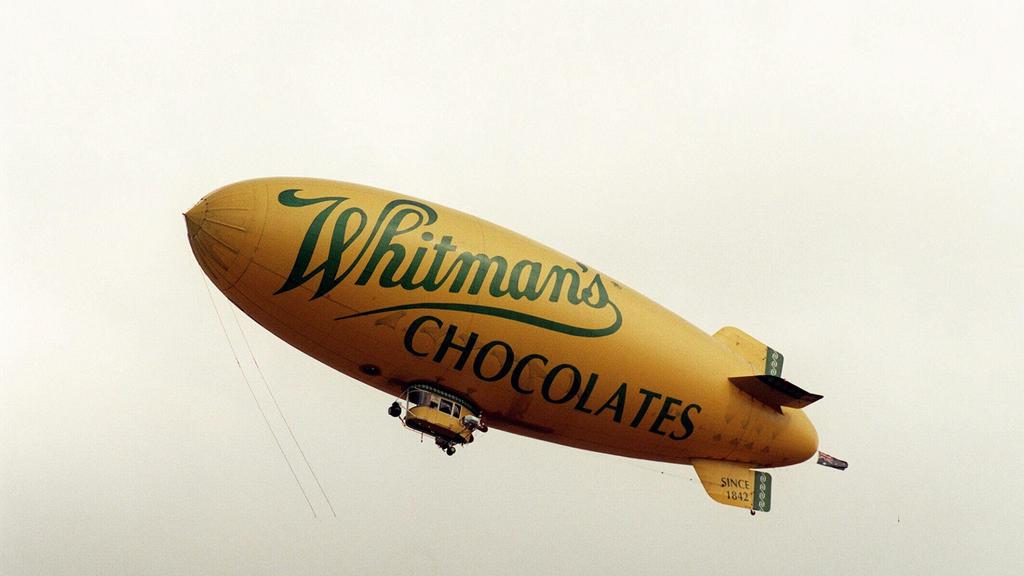
The Lightship Group was contracted to fly the blimp 125 hours a month to promote the Whitman’s brand.
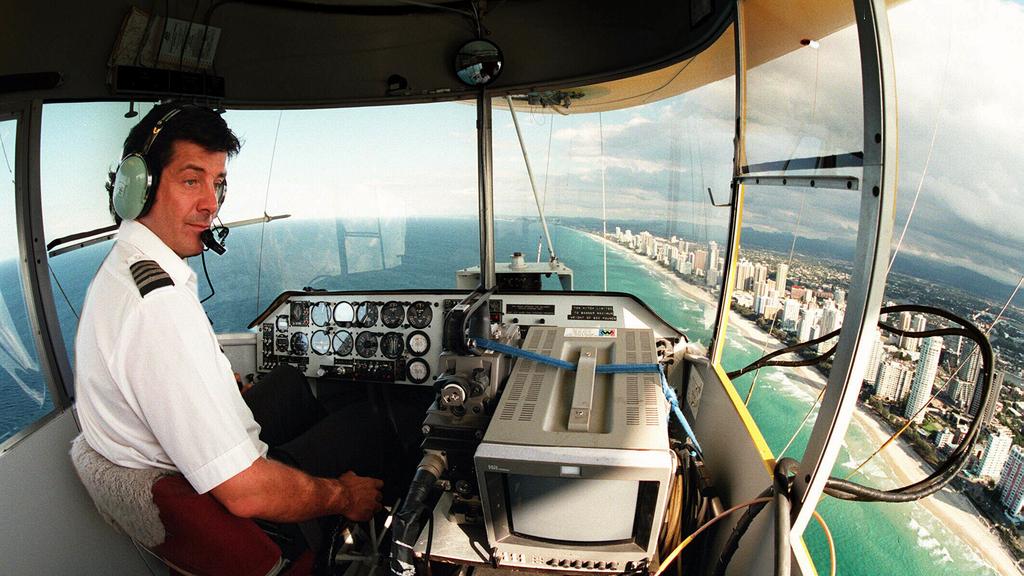
Whitman’s airship chief pilot Mike Nerandzic flying over Surfers Paradise.
While its primary base was Melbourne, the lightship’s majestic journey took it as far north as Brisbane and the Gold Coast, and west to Adelaide.
Its transport between cities was a spectacle in itself, with the airship gracefully cruising above major highways, accompanied by a dedicated ground support team.
One of its most memorable publicity stunts involved soaring over packed stadiums during major sporting events, including the beloved AFL matches, ensuring maximum visibility for the new chocolate brand.
A blimp, a bird, or a UFO?
The lightship’s unique appearance often led to amusing, and sometimes concerning, public reactions.
During its operational period, emergency services and UFO investigators reported a noticeable increase in calls from bewildered citizens who mistook the slow-moving craft for an extraterrestrial visitor.
MORE NEWS: The rise and fall of Chili’s
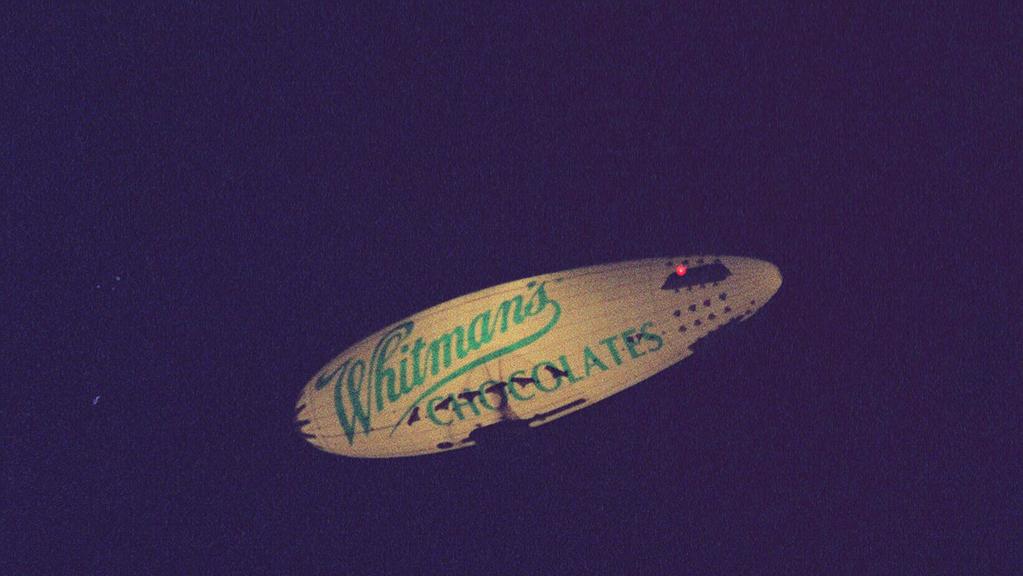
During its time of operation, calls to emergency services and UFO investigators increased due to some people mistaking it for an extraterrestrial craft.
Unfortunately, by 1999, Whitman’s decided to conclude its aerial advertising program.
This decision was reportedly influenced by increasing difficulties in securing flight permissions from the Federal Government, particularly over major cities like Sydney.
The end of an era, the dawn of a new brand
As the Whitman’s contract expired, the iconic yellow airship was destined for a new identity. It was reborn as a Goodyear blimp, shedding its vibrant yellow for a more understated grey, adorned with a blue band and the prominent yellow Goodyear logo.
Despite its relatively short tenure, the Whitman’s Lightship proved to be an extraordinary success.
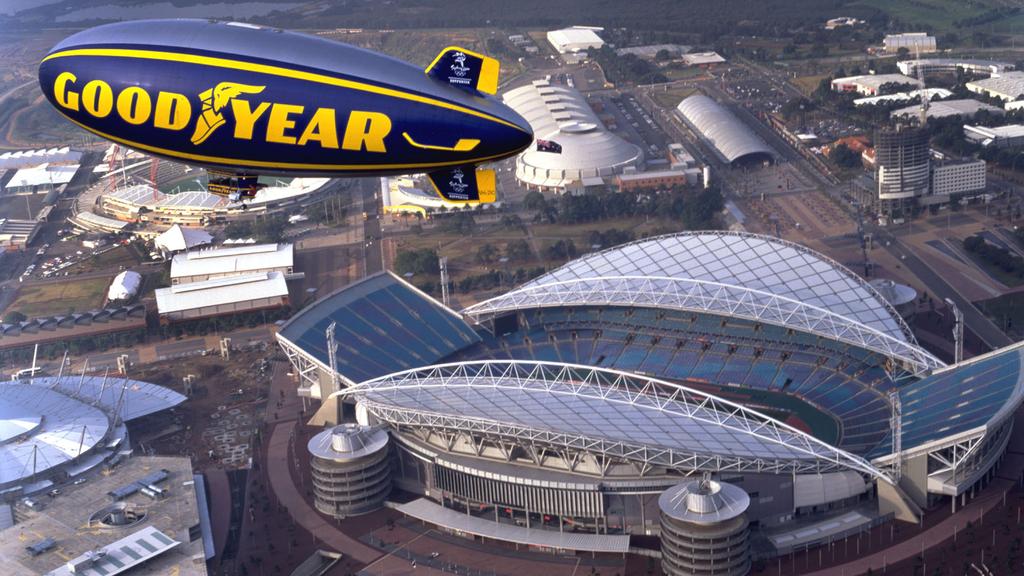
The Goodyear blimp during Sydney Olympics in 2000.
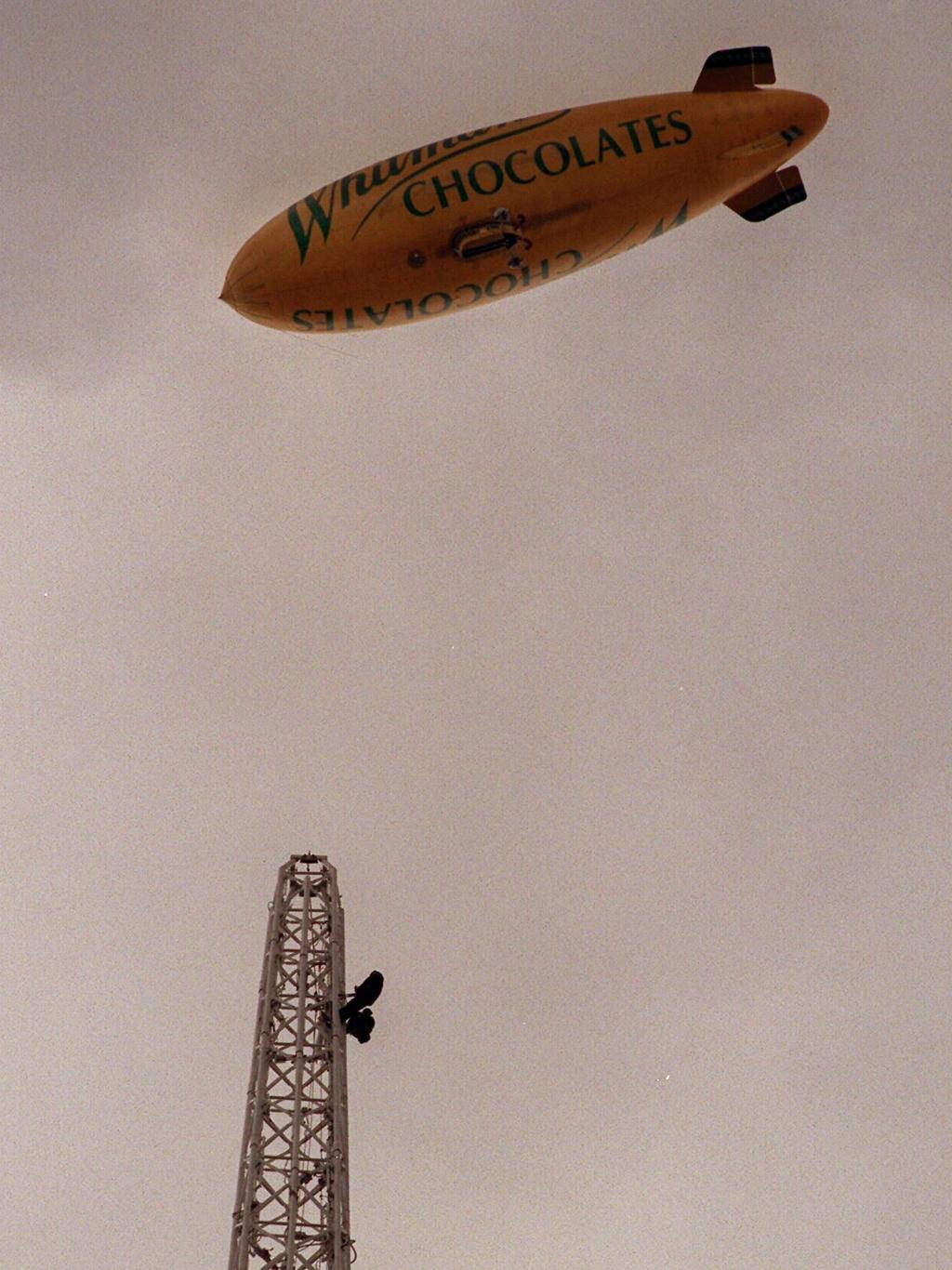
The Whitman’s Lightship flies over the top of the Melbourne Arts Centre as there are two people on the outside of the tower on September 27, 1996.

Whitman’s chocolates were particularly popular in the ‘90s.
In May 1999, former Whitman’s Australian general manager Ed McDonnell proudly told the Herald Sun that the program had been so effective that the parent company, Russell Stover, operated two similar blimps in the US.
“Certainly the lightship has created awareness and made Whitman’s part of the Australian culture because of its association with the tennis, footy and other sporting events here,” he remarked.
The campaign helped Whitman’s capture approximately 25 per cent of Australia’s then-$160 million boxed-chocolate market, a remarkable feat for a previously unknown brand.
“It was costly, but worth it. It gave us brand awareness we could not have achieved in any other way.”
Life aboard the gentle giant
The Lightship Group was contracted to fly the blimp for 125 hours a month.
While it didn’t carry paying passengers in its five-seat cabin, it frequently hosted corporate guests and, heart-warmingly, sick children from the Make a Wish Foundation, according to the Herald Sun.
Capable of staying aloft for up to 15 hours, the blimp cruised at a leisurely 55km/h, powered by two 80-horsepower Limbach (Volkswagen) engines.
Its crew of 17, including three full-time pilots, three mechanics, and ground staff, ensured its smooth operation, with eight people required to handle the airship on the ground.
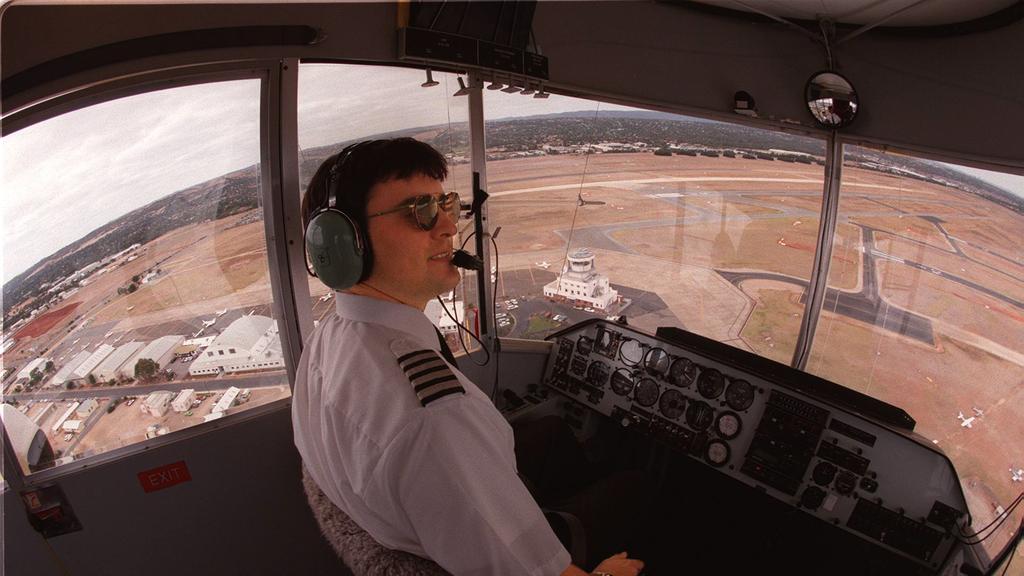
Whitman’s Chocolates Lightship pilot David Doyle flying around Parafield Airport during his Adelaide visit.
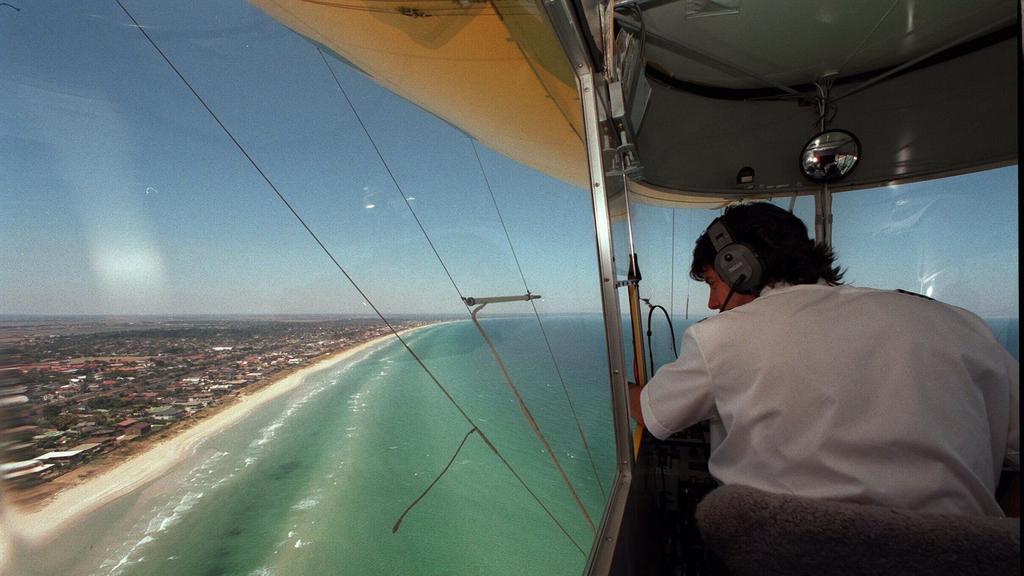
The Whitman’s Blimp flying over Port Phillip Bay looking south towards Frankston.
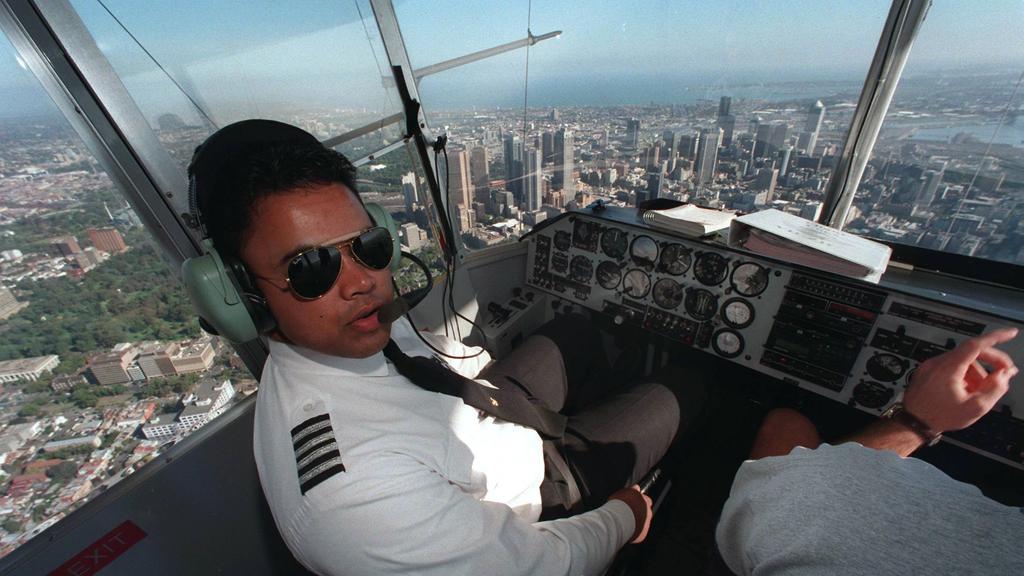
The Whitman’s Airship over the city of Melbourne with pilot, Mike Dawson, at the controls.
Chief pilot at the time David Doyle, a Boston native, described flying the blimp as “like being in a very small boat on a very wavy ocean,” noting the constant movement.
“You get tossed around a lot,” the told The Adelaide Advertiser in 1998.
Yet, he cherished the unique perspective it offered, having supported a number of major events around Australia and the world, including a Formula One Grand Prix, international golfing tournaments, American gridiron, baseball, AFL football matches and even the world’s biggest picnic race meeting at Oakbank in the Adelaide Hills.
“You’re going slower and lower and you get to see everything you’re looking at,” he explained, highlighting its value for capturing aerial footage at major events, a service often provided free in exchange for television mentions of the sponsor.
From blimps to billions: The evolution of advertising
Today, our screens are saturated with algorithms predicting our every desire, social media feeds are curated with sponsored posts, and even our smart devices whisper product suggestions.
Advertising is omnipresent, often subtle, sometimes intrusive, and almost always digital.
But back in the late 90s, the Whitman’s Lightship represented a different philosophy.
It was a grand, unmissable spectacle, a physical embodiment of brand awareness that commanded attention simply by existing in the sky.
There was no ‘skip ad’ button, no ad-blocker for a 39-metre yellow airship.

A commemorative Whitman’s Chocolates Lightship Candy Tin from 1999 is currently for sale on eBay. It’s been listed with a price guide of $42.78

Unfortunately five chocolate wrappers are all the remain inside.
It was a singular, shared experience, a conversation starter, and a testament to the power of a truly unique, large-scale campaign.
It wasn’t about data points and impressions; it was about wonder and spectacle.
Today, around 25 blimps are believed to be still in existence worldwide, with about half of them in active use, primarily for advertising and aerial photography.
The number is low due to high operational costs, weather limitations, and competition from modern drone technolog
As we navigate an advertising landscape dominated by micro-targeting and digital noise, one can’t help but feel a pang of nostalgia for the days when a chocolate company could capture an entire nation’s imagination with a blimp.
Inspiration & Style
Going Dutch: Meet the Aussie entrepreneurs finding success in Amsterdam
Inspiration & Style
Inside luxe hotel where Kim Kardashian and Lewis Hamilton spent ‘very romantic’ weekend

Inspiration & Style
From Down Under to Dubai: meet the Aussie entrepreneurs who have found success in the UAE