The bizarre story of Australia’s floating hotel demolished on Kim Jong-un’s orders

Imagine a five-star resort, not nestled on a sandy beach, but gently bobbing on the azure waters of the Great Barrier Reef.
Australia once had such a marvel – the world’s first floating hotel, a beacon of 1980s luxury and ambition.
It was a dream, a spectacle, a vision of the future and a social media sensation which still captures audiences today.
But its story isn’t one of tranquil sunsets and endless holidays.
Instead, it’s a wild, globetrotting saga that ended not with a whimper, but with a wrecking ball, ordered by none other than North Korea’s Kim Jong-Un.
A daring dream takes float
In early 1988, the John Brewer Reef, a pristine expanse of coral roughly 70km off Townsville, became the unlikely home to a true architectural wonder.
The Four Seasons Barrier Reef Resort wasn’t just a hotel; it was a floating city.
Seven storeys high, boasting nearly 200 rooms, a glowing neon nightclub, bars, restaurants, a helipad, and even a tennis court. It was the epitome of ‘80s extravagance and a testament to Australian ingenuity.
MORE NEWS
$100bn ghost city’s shocking reality exposed
‘Costly, but worth it’: Aus’s forgotten flying billboard
Top-secret NASA site listed in historic $46m sale
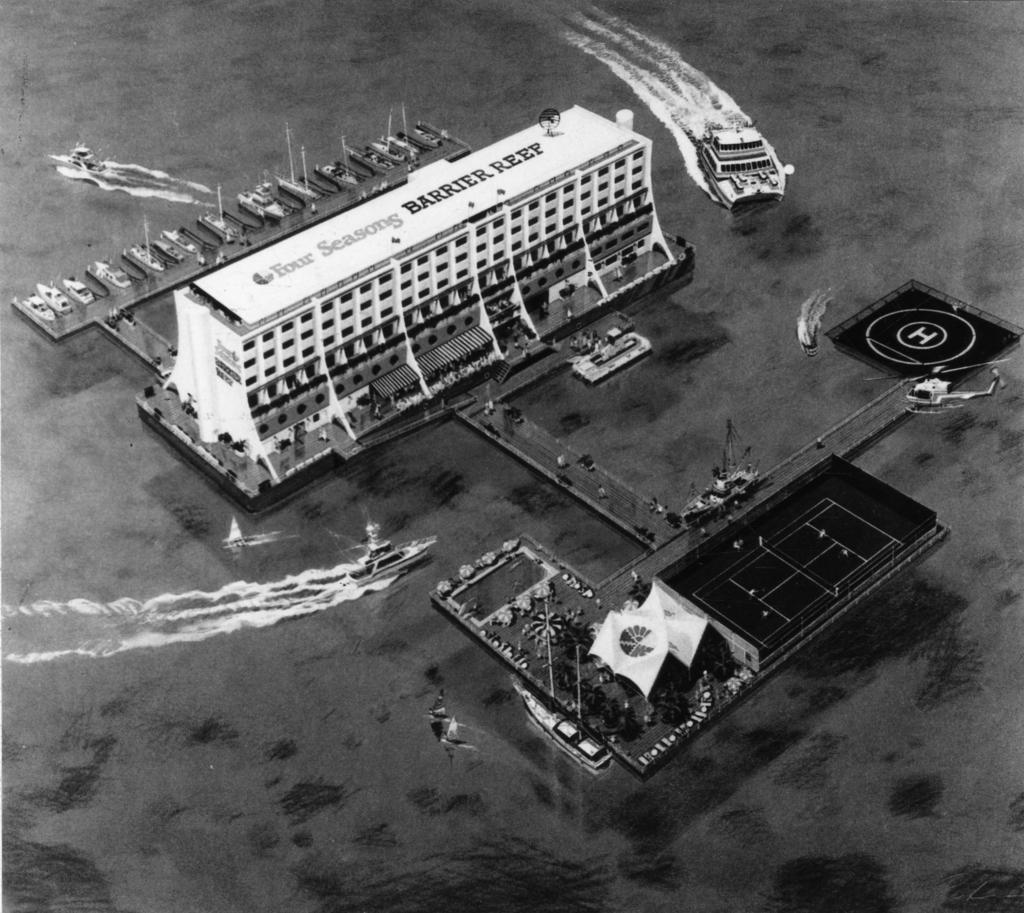
An artist impression of The Four Seasons Barrier Reef Resort released in 1987.
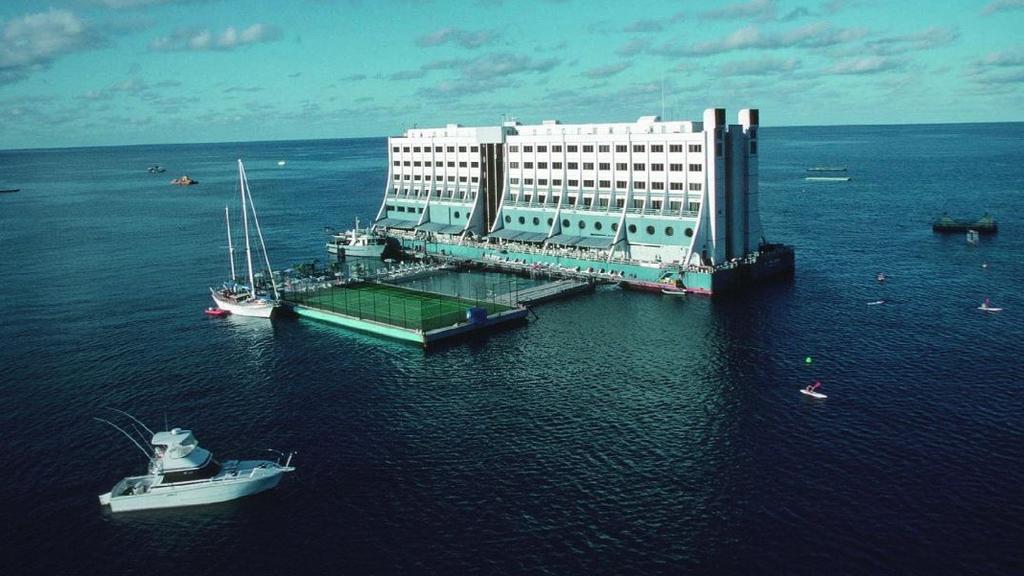
The Four Seasons Barrier Reef Resort after it was built and ready to welcome guests in 1988.
“It was a world-first attempt to have people staying on the reef in a floating — literally, a floating — hotel,” Robert De Jong from the Townsville Maritime Museum recounted to the ABC in 2018.
The brainchild of visionary Townsville developer Doug Tarca, the hotel was designed to offer unparalleled, permanent access to the reef’s wonders.
His son, Peter Tarca, remembered its striking appearance: “From a distance it just kind of looked like another ship… But as you got closer and closer, clearly you’d see it was a different kind of structure.”
It was a bold statement, putting Townsville firmly on the global map.
The Reef’s rough welcome
The sheer audacity of the project was its initial draw.
Built in Singapore, the Barrier Reef Floating Resort was an engineering marvel, towed over 5000 kilometres to its Australian mooring.
Yet, pioneering ventures often face rough seas.
Construction delays and a reported cost exceeding $40 million – around $106m in today’s money – were just the beginning.
MORE NEWS: ‘Used to go off’: Inside eerie abandoned Aus pub
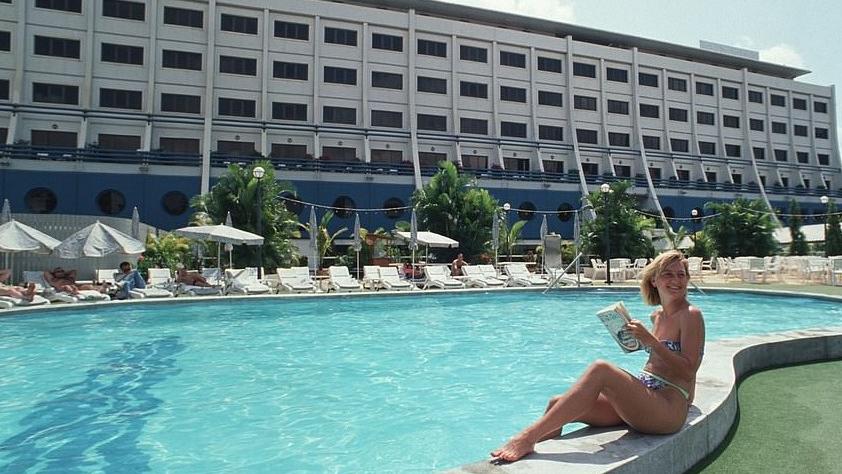
A hotel guest sits by the pool of the Floating Hotel, as it was rebranded in downtown Ho Chi Minh City on the banks of the Saigon River, there it became known as ‘the floater’ and was a popular nightspot. Source: LighRocket
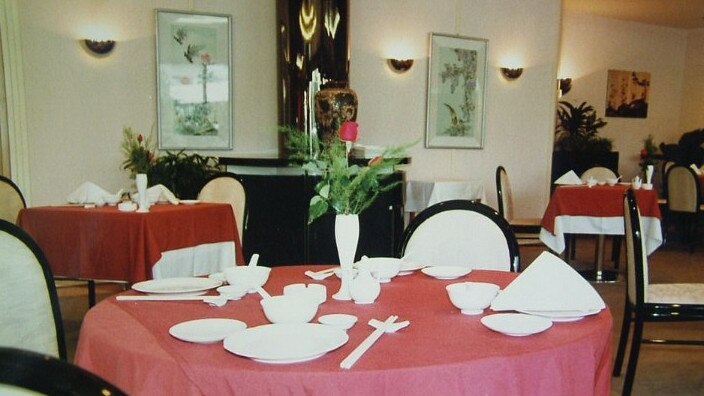
The 1980s-style dining room of the hotel during its Vietnam days. Source: Nguyen Ngoc Chinh/ Flickr
Before its grand opening, a cyclone tested its mettle – remarkably, the main structure held firm, though the pool sustained damage.
However, persistent rough weather proved a more insidious foe, frequently severing connections to the mainland.
Guest numbers dwindled.
Whispers of poor marketing, management missteps, and even a fire on a water taxi began to circulate, contributing to its financial woes.
“I just think it was probably a bit ahead of its time, and it just became too costly to operate,” Mr De Jong surmised.
The dream, it seemed, was simply too expensive to sustain in its original form.
The ‘Floater’ finds a new horizon in Vietnam
But a floating hotel possesses a unique advantage: mobility.
When the finances dried up, the owners made the pragmatic decision to cut their losses.
Just over a year after its grand opening, the hotel was sold to a company in Ho Chi Minh City, Vietnam.
It embarked on another 5000km odyssey, reborn as the Saigon Floating Hotel.
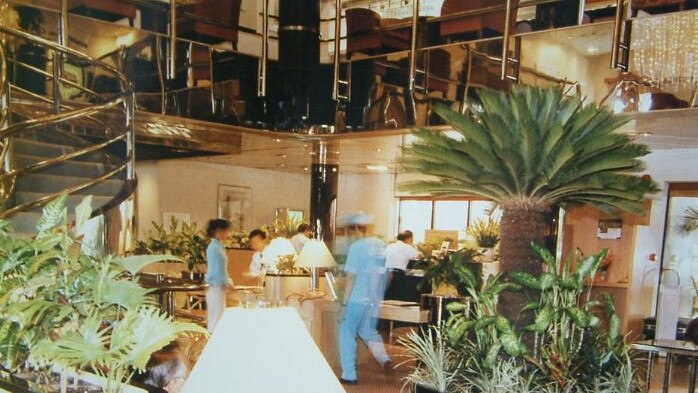
The $40m hotel was completed in Singapore and Tarca’s design was towed over 3000 miles to the reef. Source: Nguyen Ngoc Chinh/ Flickr
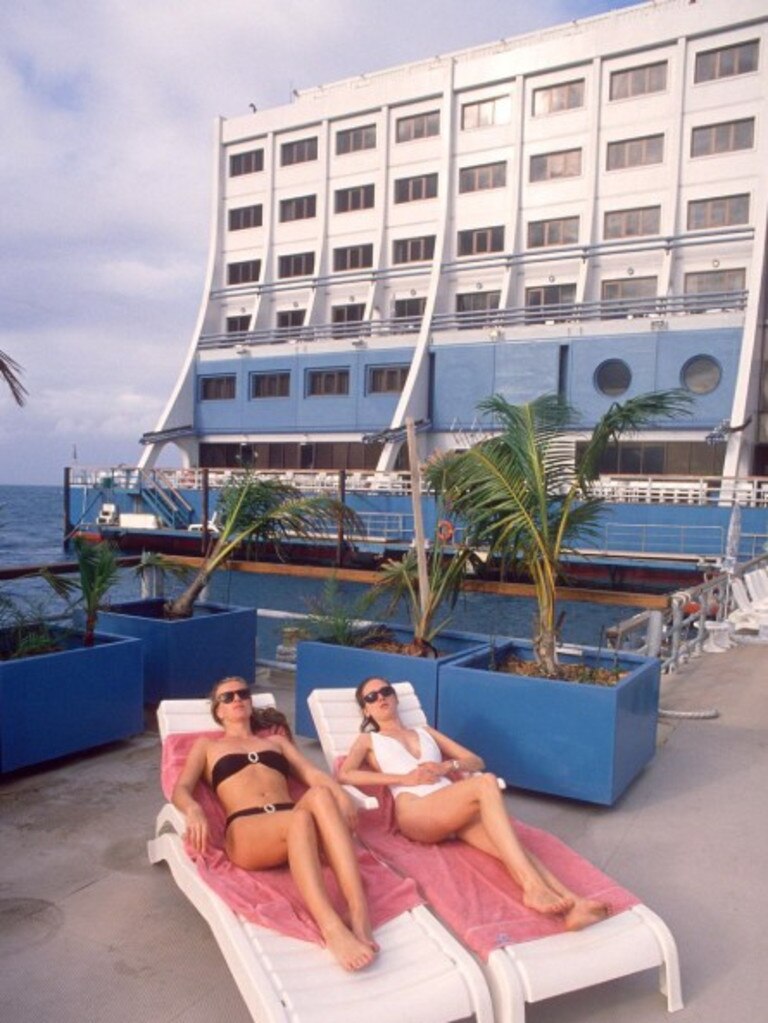
A pair of guests relax on sun loungers at the hotel in 1988 before it was moved thousands of miles away to Vietnam.
Affectionately dubbed “The Floater” by locals, it found a vibrant new lease on life.
Moored in the Saigon River from 1989 to 1997, it became a popular luxury destination, complete with two nightclubs, perfectly positioned to capitalise on Vietnam’s burgeoning post-war tourism boom.
It was a symbol of emerging prosperity, offering a taste of five-star glamour in a rapidly developing nation.
The unbelievable North Korean twist
Yet, “The Floater’s” incredible journey was far from over.
Financial troubles, a recurring theme in its life, resurfaced, leading to its third sale – and its most astonishing destination.
In an almost unbelievable twist of fate, it was acquired by North Korea.
The aim was to attract tourists to Mount Kumgang, a scenic area near the border with South Korea, during a brief period of inter-Korean rapprochement.
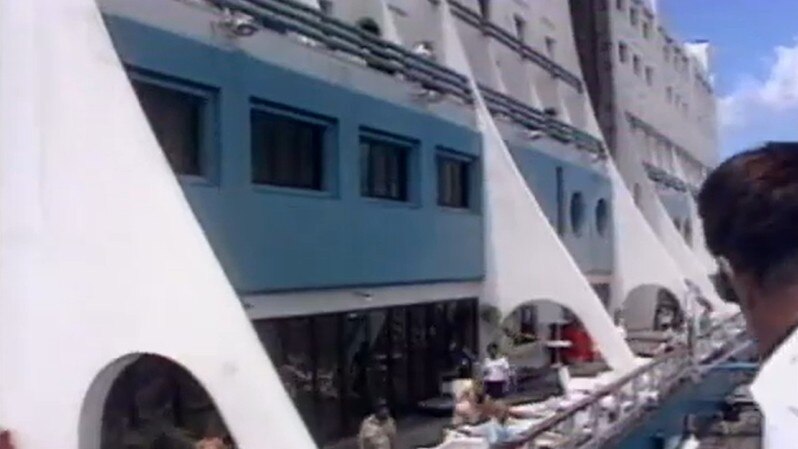
The resort, unfortunately, only lasted a year in Australia before being sold off.
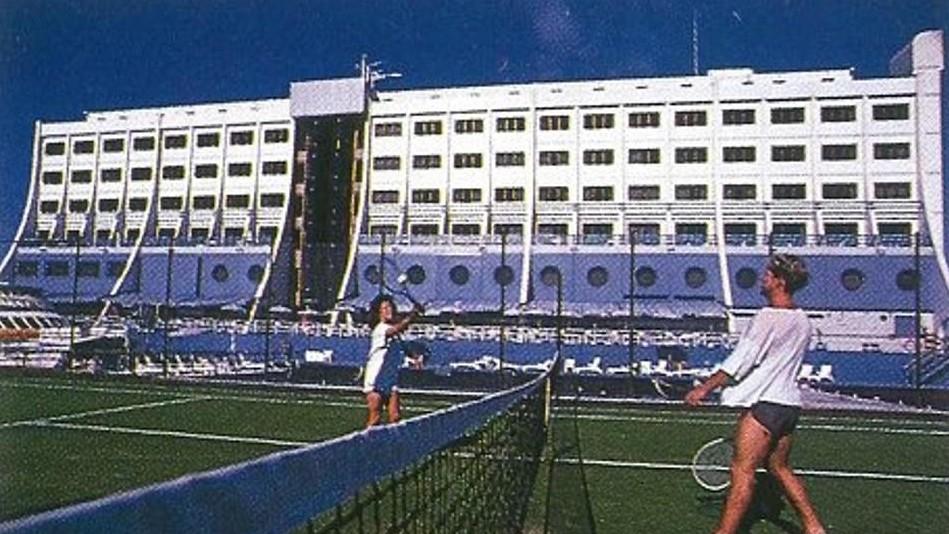
Guest playing a round of tennis.
After another 2,800-mile voyage, it reopened in October 2000 as Hotel Haegumgang, managed by South Korean company Hyundai Asan.
For years, it welcomed over two million tourists, a poignant symbol of hope and cross-border co-operation in a divided peninsula.
Kim Jong-Un’s wrecking ball
Tragically, this fragile peace was shattered in 2008 when a North Korean soldier shot and killed a South Korean tourist.
All tours were immediately suspended, and Hotel Haegumgang, along with the entire Mount Kumgang tourist area, shut down indefinitely.
Its ultimate fate was sealed in 2019.
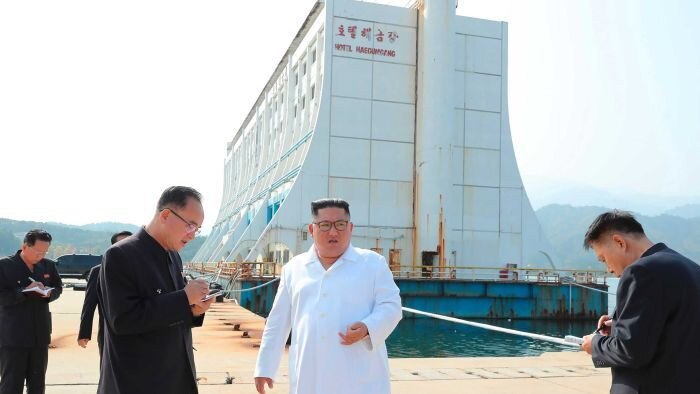
North Korean leader Kim Jong-un has ordered the destruction of a dilapidated luxury hotel which once floated off the north Queensland coast.
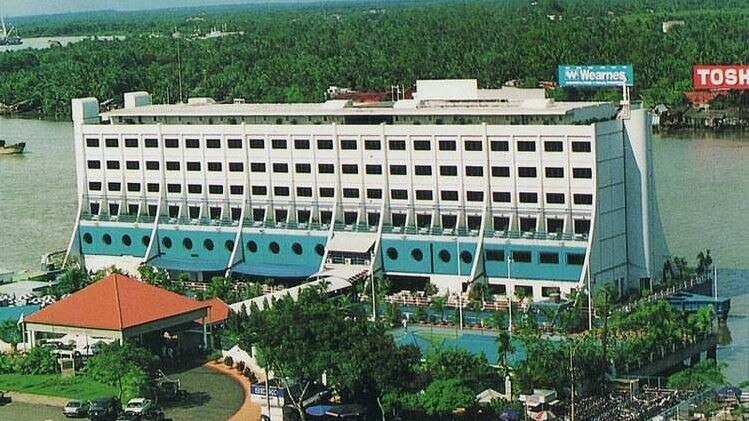
Hotel Haegumgang – formerly known as the Four Seasons Barrier Reef Resort.
North Korean leader Kim Jong-Un, during a visit, lambasted the facilities, including the hotel, as “shabby” and ordered their demolition to redesign the area in a style “more fitting to North Korean culture.”
While never officially confirmed, it’s widely believed the former Four Seasons Barrier Reef Resort was finally dismantled in 2022, its incredible, globetrotting journey coming to an ignominious end on a dictator’s command.
Ahead of its time? Could it float today?
The story of Australia’s floating hotel is a poignant reminder of a bold vision that perhaps arrived too early.
In the 1980s, the technology, environmental understanding, and logistic support simply weren’t ready for such a grand experiment. It was a marvel, but a flawed one.
But what about today? With exponential advancements in marine engineering, sustainable design, renewable energy solutions, and a global appetite for unique, eco-conscious travel experiences, could a modern iteration of the floating hotel thrive on the Great Barrier Reef?
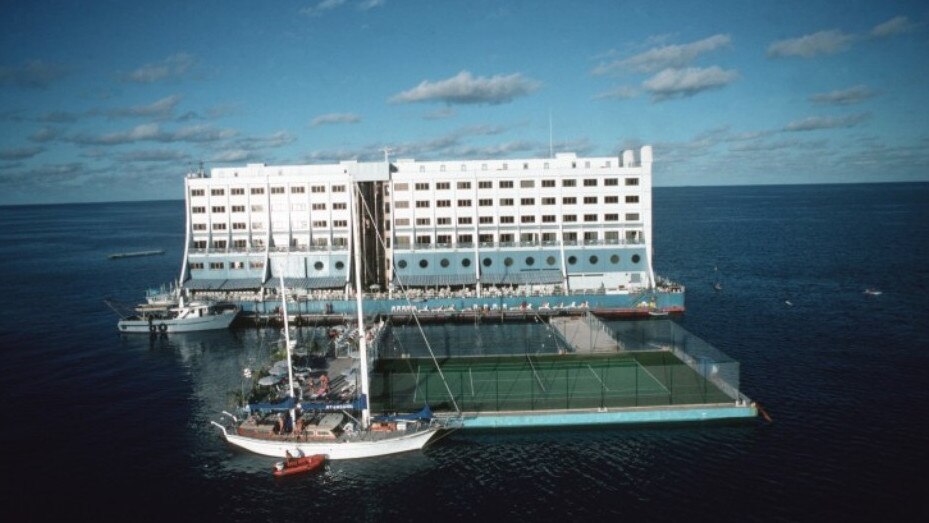
The world’s first floating hotel may be gone, but its story endures – a captivating chapter in Australia’s history, prompting us to ponder what innovative, yet sustainable, futures might still float on the horizon.
The challenges of weather and logistics remain, but contemporary technology offers solutions unimaginable in the ‘80s.
Perhaps the lessons learned from “The Floater’s” tumultuous, continent-hopping journey aren’t about the impossibility of the dream, but rather the crucial need for robust operational planning, adaptive management, and a deep understanding of both environmental sensitivities and market demands.
Australia’s lost wonder may be gone, but its legacy sparks a tantalising question: was it a folly, or merely a glimpse into a future we’re only now ready to build?