In a nutshell: ‘Emotional decision’ to sell prime peanut farm
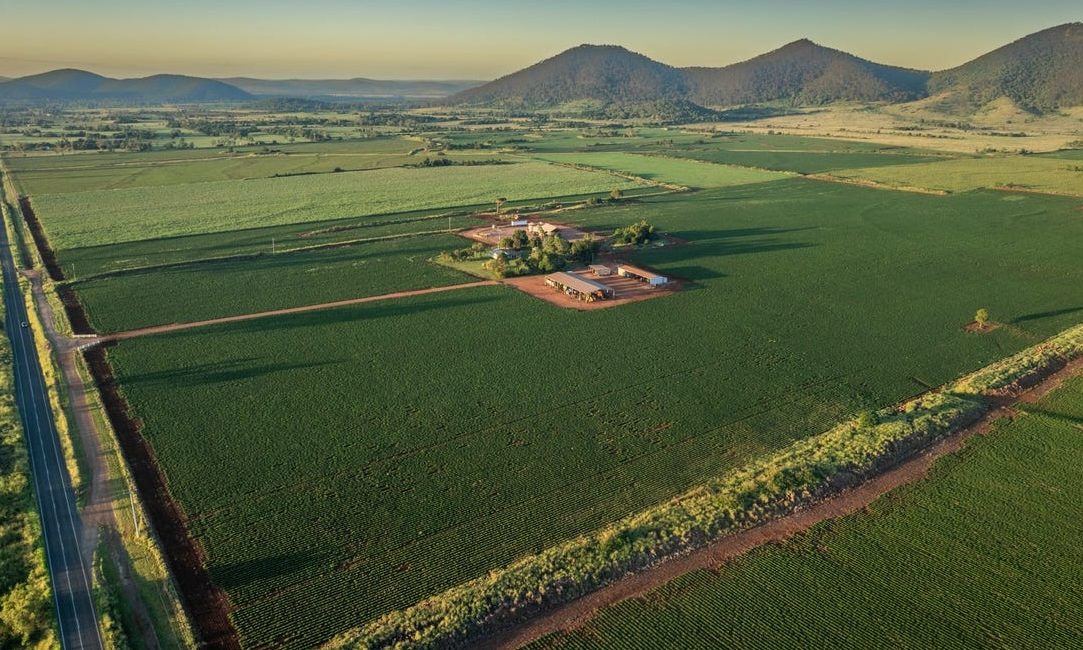
A fourth generation peanut farm located in one of Queensland’s top producing regions has hit the market with an $8 million price guide.
Regarded as one of Australia’s most significant peanut-producing farming operations, 12500 Isis Highway, Coalstoun Lakes in Queensland is located in the North Burnett region – about 90 minutes from Maryborough.
Rackway Farms spans 473 hectares and has been a tightly-held family empire progressively developed over more than 45 years.
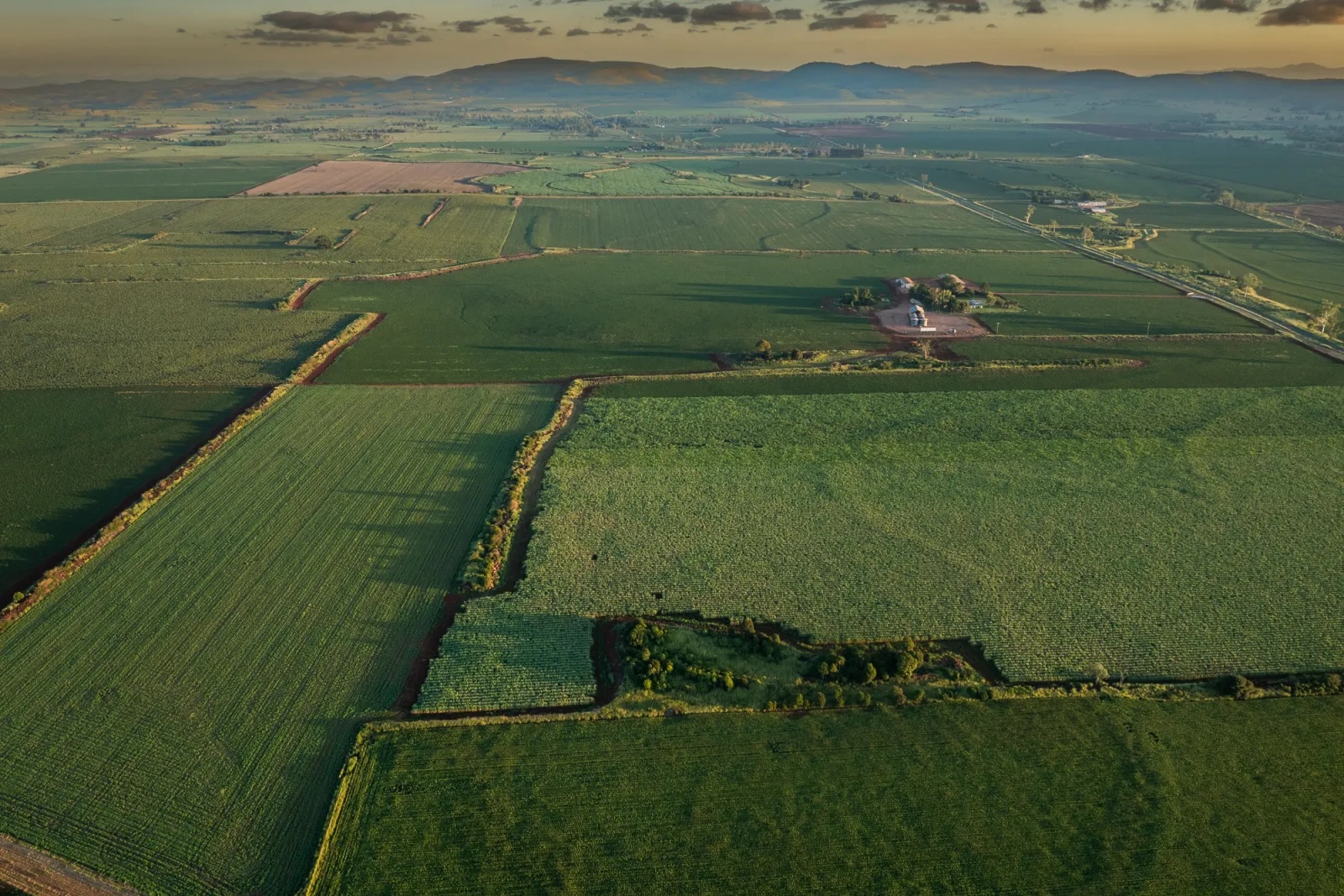
Rackway Farms spans 473ha in Queensland’s North Burnett region. Picture: realcommercial.com.au
“Ray Rackemann, my great-grandfather, moved to Coalstoun Lakes from Kingaroy district in 1951 and share-farmed until a paddock was available to purchase to grow peanuts,” farmer Cameron Rackemann said.
Today, Mr Rackemann’s vision has been developed into an aggregation comprising 10 lots across four farms, with about 438ha of arable land, and is run by Cameron and his father Mark, while his wife and mother manage the paperwork.
“We’ve got some great seasonal workers that help in the harvest. We’ve got two part time, and full time operators, that help us with the earth moving and the trucking – it’s still very much a family business,” Cameron said.
While peanuts are the core enterprise of Rackway Farms, it is also supported by a diversified and strategically managed cropping rotation of grains, millet, sorghum, oats, barley, hay and sunflowers.
It has been an emotional decision to list the farm for sale, which Mr Rackemann said has been where his father worked hard his whole life.
“My family is quite young and I just want to try and maintain that determination and motivation and see what is out in the world before I get too old I guess,” he said.
“We’re quite curious where interest in our property would be, because we’ve got very, very extensive storages for peanuts and grains, and lots of silos with quite vigorous drying capacities that other areas wouldn’t have.
“We’ve got automated dryers that could lend itself to macadamias.”
For sale through Colliers Agribusiness in Brisbane, agent Nicholas Warmington said the listing was a rare opportunity to acquire a nationally significant cropping asset, with buyer demand for proven largescale agricultural holdings remaining strong.
“Rackway Farms is not only a tightly held Coalstoun Lakes aggregation, it is a business of national scale, producing a significant percentage of Australia’s peanut crop,” he said.
“Assets with this level of production capability, consistency and industry standing are seldom offered to the market.”
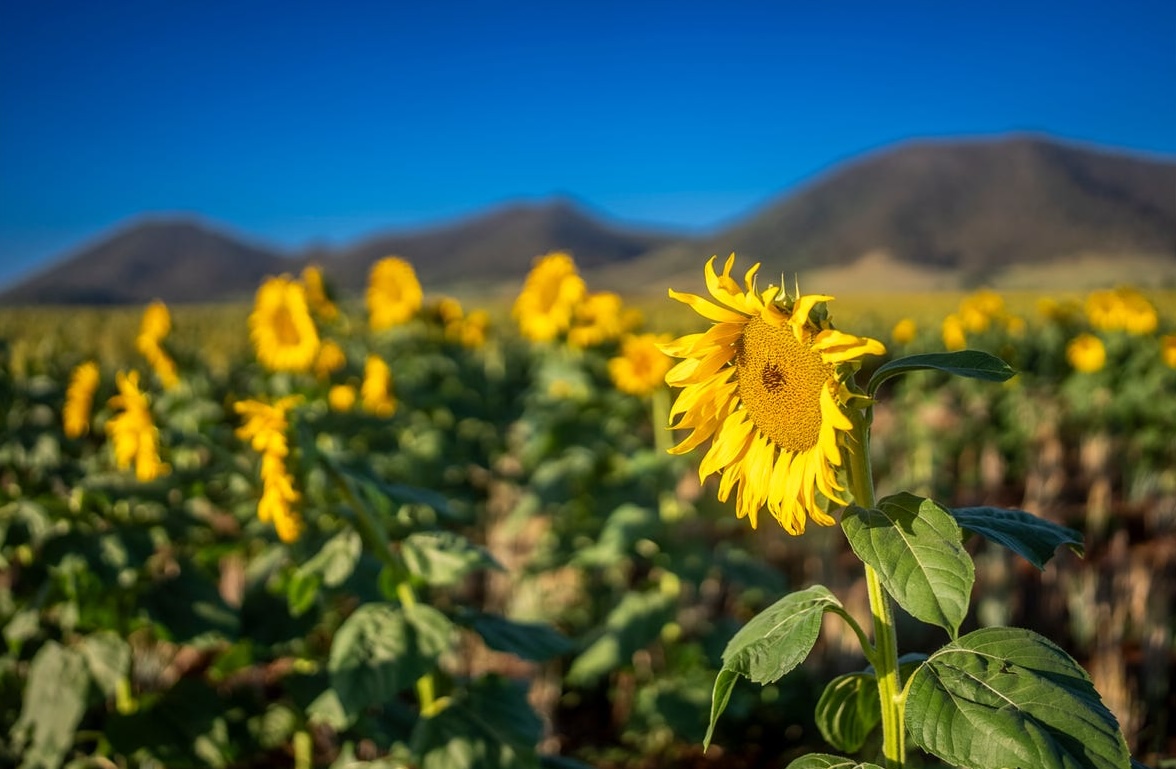
Rackway Farms’ focus is peanuts but it also produces other crops such as sorghum grain and sunflowers. Picture: realcommercial.com.au
Buyer interest has mainly been from locals, Mr Warmington said.
“We expect strong interest from owner-operators, corporate farming groups and private investors seeking scale in a reliable and proven production region,” he said.
With a strong reputation for its consistent delivery of high-quality nut-in-shell, with established commercial clients, co-agent Jimmy Ashleigh said long-standing supply relationships highlighted the quality and reliability of the operation.
“Rackway Farms has built a strong reputation within the peanut industry, supplying major processors over the years,” he said.
“This reflects the quality of the product, the consistency of production and the strength of the underlying farming systems.”
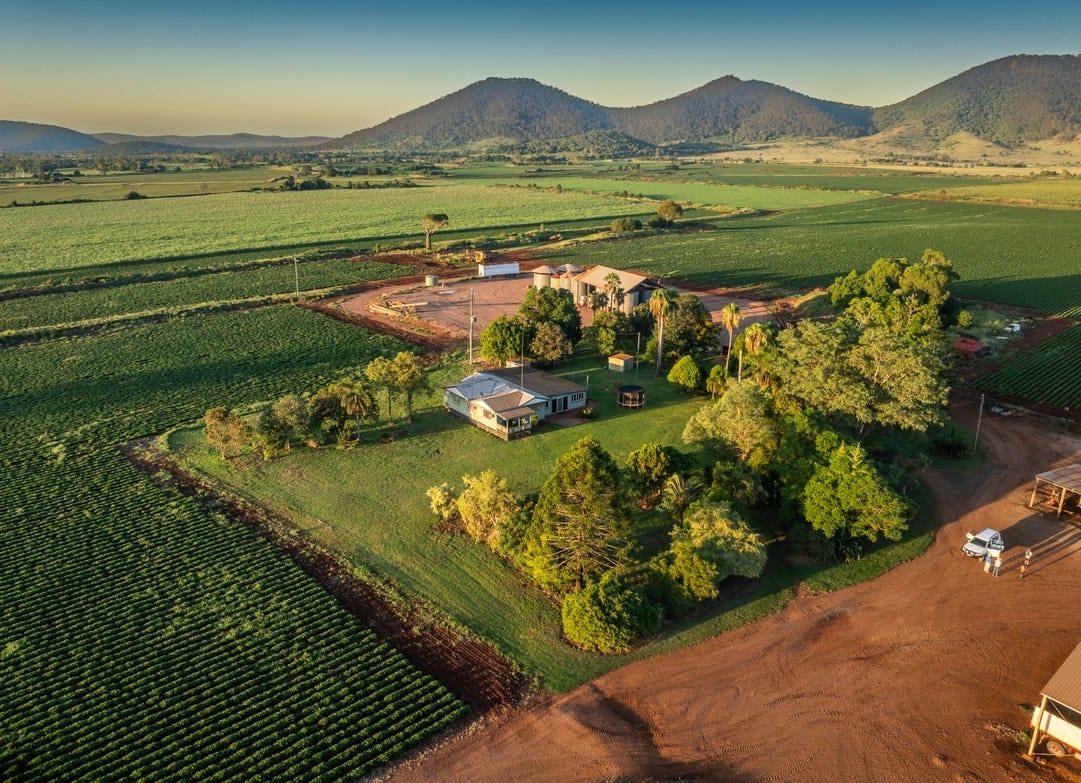
Rackway Farms comes with three houses. Picture: realcommercial.com.au
Big Pink and Kairi peanut varieties have been the recent focus, while crop rotations are carefully designed to manage disease, nutrient balance and pest pressure, supporting long-term soil health and productivity.
“We are seeing great potential in the fertility of the soil, with the current fertiliser price, climate and pesticides and that type of thing … our soil has really been a saviour to make a pretty average farmer into a really good one,” Mr Rackemann said.
Regular soil testing and targeted fertilisation programs underpin performance across the aggregation, and all cropping operations benefit from modern agronomic practices, including GPS-controlled traffic.
Other features of the operation include a secure water supply, while approximately 98.35 per cent of the land is classified as Ferrosols, which is among Australia’s most productive agricultural soil types.
Infrastructure includes three houses, machinery and farm sheds, workshops and storage facilities, as well as former dairy infrastructure.
The expressions of interest campaign to buy the farm closes March 17.