Bunnings crowned Australia’s most trusted brand as trust in online giant Temu collapses

The digital dream is fading for major online retail giants, as fresh data from Roy Morgan reveals a dramatic shift in Australian consumer trust.
While platforms like Temu and Shein plummet in popularity, traditional bricks-and-mortar stalwarts are not just holding their ground – they’re cementing their status as the nation’s most trusted brands.
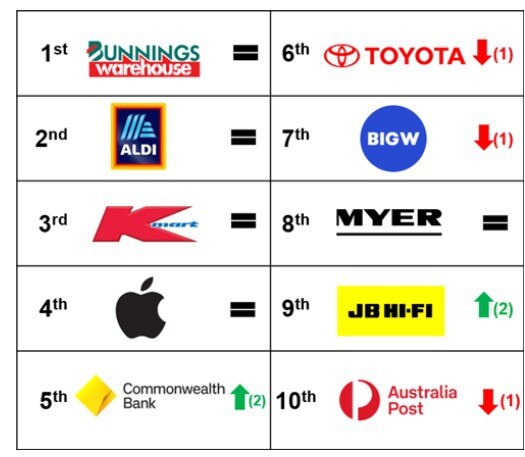
For the eighth consecutive quarter, hardware behemoth Bunnings has reigned supreme as Australia’s most trusted brand in the 12 months to September 2025.
RELATED
Christmas gift shoppers warned as cheap online platforms gifts divide
Bunnings opens Australia’s largest five-storey warehouse
Aus retail under siege: Temu, Shein’s brutal impact
Discount supermarket Aldi, department store Kmart, and tech giant Apple continue to hold their ground in the top four, a quartet of brands deeply embedded in the Australian consumer psyche through their physical footprints.
However, the biggest surprise in rankings were banks.
Top 10 most trusted brands. Source: Toy Morgan
“There have been big moves from other major brands – especially the big banks,”
Michele Levine, CEO of Roy Morgan, said.
“Commonwealth Bank has increased two spots to fifth overall – its highest ever ranking, Westpac is up five spots to 14th, NAB has improved one place to 19th, and ING is back in the top 20 – up two spots.
“The improving trust in Australia’s banks is reflected in the broader overall industry rankings with the Banking industry rising an impressive 10 places in the last quarter to be eighth overall – up from 18th only three months ago.
“This is by far the biggest increase of any industry, with the second-best performance by the closely related Insurance Industry, up three rankings to 13th overall.”
Online retailers face a crisis of confidence
Conversely, the shine is rapidly coming off some of the online retail darlings.
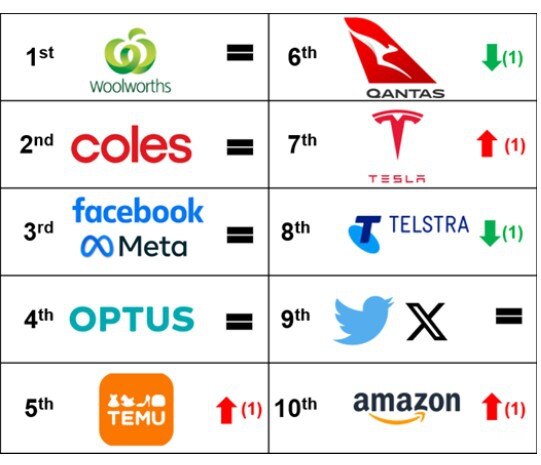
Temu, the Chinese-based online marketplace, has plummeted to become Australia’s fifth most distrusted brand overall, and alarmingly, was the single most distrusted brand in September 2025.
Shein and Amazon are also facing increasing levels of distrust, with Amazon now the tenth most distrusted brand.
“Perhaps even more consequential is what’s happening at the other end of the rankings among Australia’s most distrusted brands. Although the big supermarkets Woolworths and Coles are again Australia’s two most distrusted brands – it is online retailers such as Temu, Amazon and Shein that are falling down the rankings – and especially Chinese-based online retailer Temu,” Ms Levine said.
MORE NEWS: Dramatic blow for Gen Z’s favourite stationery brand
Top 10 least trusted brands. Source: Toy Morgan
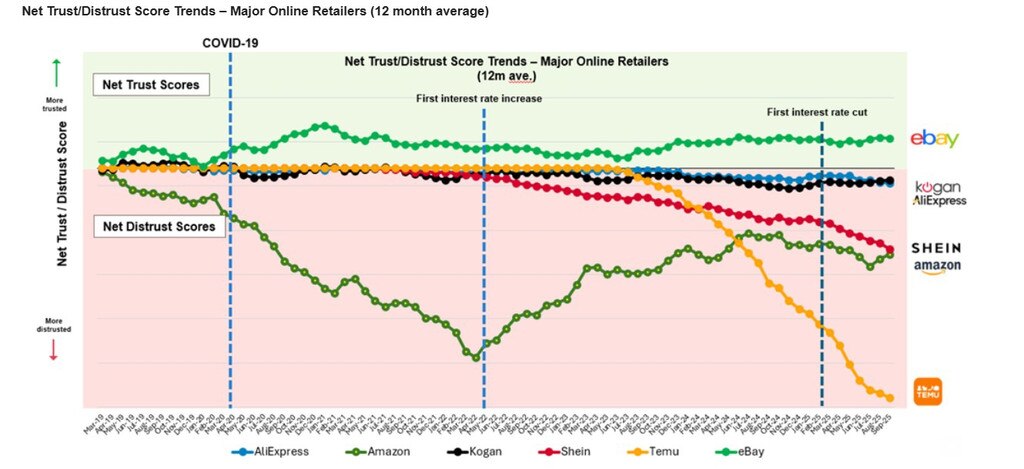
“Since Roy Morgan began measuring Temu in mid-2023, the brand has been on a steady downward trajectory that shows no signs of ending anytime soon – and is now Australia’s fifth most distrusted brand overall in the 12 months to September 2025. In fact, in the single month of September – Temu was the most distrusted brand of all.
“As more Australians trial the platform, distrust is accelerating rather than stabilising, a sign real-world experience is feeding the decline.
“The biggest drivers of Temu’s distrust are poor quality, a lack of ethics, dishonesty, a lack of data privacy, and overall unreliability. Poor quality and low standards are accelerating fastest, but every negative driver is reinforcing the overall surge in distrust.”
Commercial real estate: A beneficiary of trust
The seismic shift in consumer sentiment could have profound implications for commercial real estate.
As trust gravitates towards brands with a physical presence, demand for well-located retail spaces is likely to strengthen.
Landlords and developers may find renewed interest from established brands looking to expand their footprint or enhance their customer experience.
MORE NEWS: Australia Post’s bold $500m move
Source: Toy Morgan
The data suggests that Australians are moving beyond purely price-driven decisions, with concerns about ethical behaviour and “profit triumphalism” now outweighing affordability for many.
This plays directly into the hands of bricks-and-mortar retailers who can offer transparency, customer service, and a tangible connection that online-only platforms struggle to replicate.
Only earlier this week, Bunnings opened its first five-storey mega store in northern Sydney in what is become a blueprint for future stores.
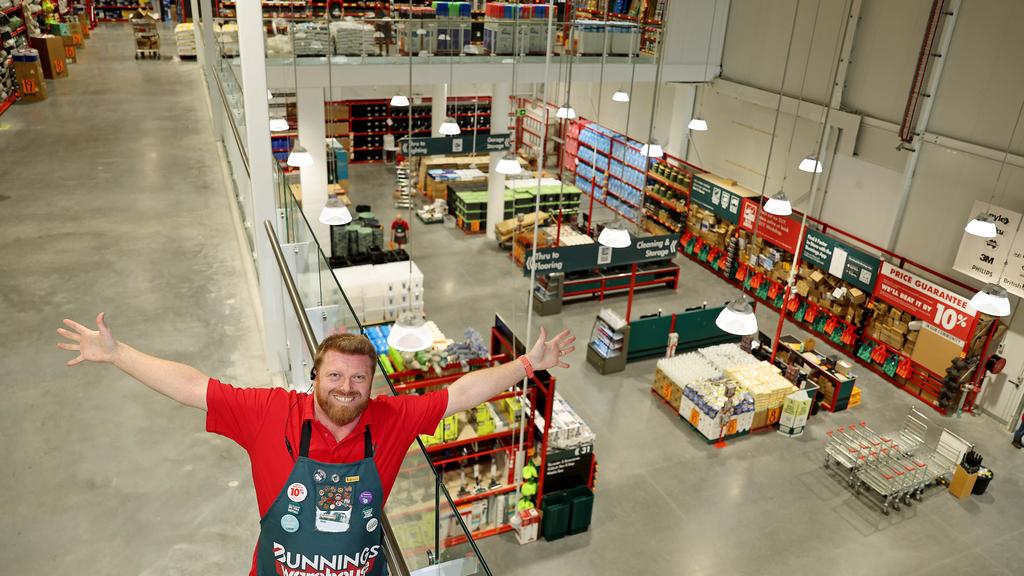
Complex Manager Paul Burgess in the new Bunnings at Frenchs Forest. Picture: John Appleyard
The $48m warehouse – so large even staff need a map – features three levels of retail, including a new kitchen design centre and the first Beaumont Tiles “store within-store’ concept as well as parking for more than 400 cars.
In stark contrast, enthusiasm for Temu is fading with a 40-year-old Aussie woman telling News Corp last month that she had been battling her mother-in-law over cheaply made and meaningless Christmas presents for the last two years.
“We’ve perfected the art of pretending these Temu gifts are anything but the flimsy, baffling, destined-for-landfill tat they truly are,” she said.
“The cost-of-living crunch is real, and Temu promises a treasure trove of ‘deals’. But if our festive cheer is now measured by the sheer volume of plastic crap, then we’ve officially lost the plot,” she added.
“Honestly, we’d prefer an empty cupboard to another unwanted oven mitt – because the thought of my mother-in-law inspecting her ‘thoughtful’ dog’s-ass-scented candle is enough to make you want to move to Antarctica.”
The message is clear: in an era where trust is a precious commodity, Australia’s most beloved brands are proving that a strong, ethical, and reliable bricks-and-mortar presence is not just surviving, but thriving.
This bodes well for the future of Australia’s retail property market, as consumers increasingly seek out the familiar and the trustworthy.