Video Ezy: The complete story of Australia’s forgotten franchise


What happened to the beloved video rental stores? Picture: Annette Dew
Once a cornerstone of local shopping centres and a cause for fierce family debate about what to watch, Video Ezy’s is a source of fond memories for many Aussies.
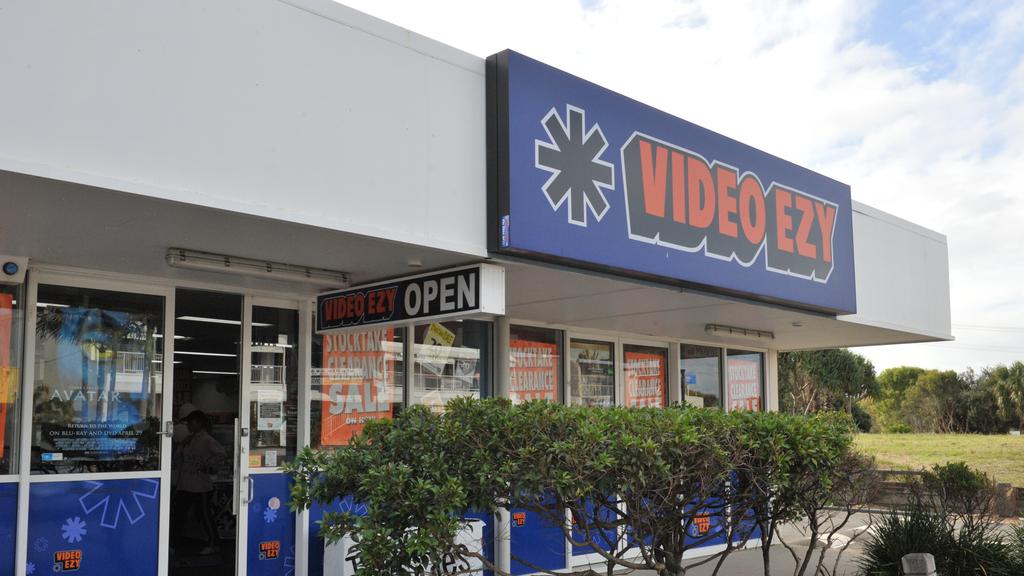
At its peak in the mid-2000s, Video Ezy had over 500 video rental shops donning its orange and black logo.
Since then, it has faded into obscurity, much like the film formats it once rented out.
While the rise of streaming played a huge part in the franchise’s downfall, it was able to survive before a key moment in history killed the franchise.
Here is the story of the iconic video rental store’s rise and fall.
Humble Hurstville beginnings
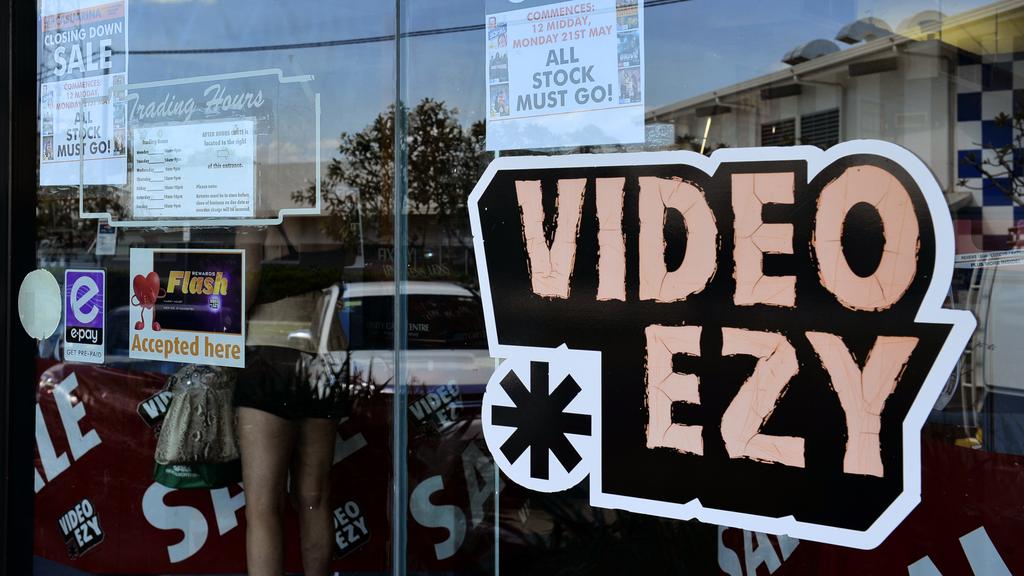
The Video Ezy franchise begun over 40 years ago.
Video Ezy commenced trading in 1983, when Kevin Slater opened a store in Hurstville renting out a small selection of VHS and Betamax format movies.
A year later, Video Ezy would become a franchise, opening a new store in Miranda to service Sydney’s Sutherland Shire.
The stores were seen as a disrupter to the scheduled nature of broadcast TV, allowing Aussies to watch what they wanted, when they wanted to.
After expanding into other states, Video Ezy rounded out the 80s with its eyes across the Tasman, opening its first international location in Auckland, before seeking out locations for an even bigger expansion.
MORE: Sydney tops London in global money list
Asian expansion
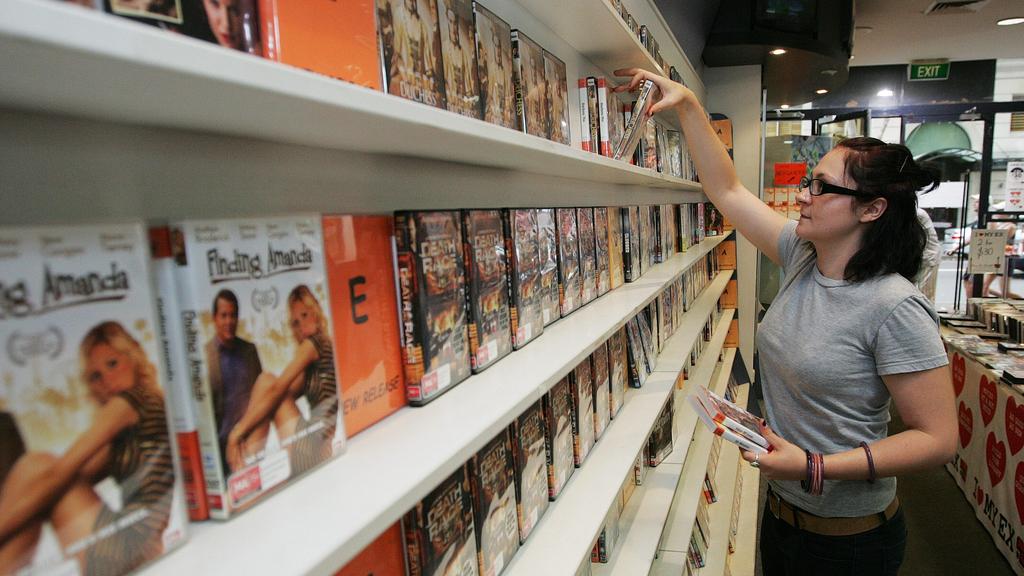
Video Ezy went international in the late 90s.
Video Ezy expanded into Asia in the late 1990s, partnering with Malaysian conglomerate Berjaya Group to launch in Malaysia in 1997, Thailand in 1999 and later Singapore in 2001.
It was reported in 1999 that the company wanted 300 more outlets in Asia in the next few years.
At this time, Video Ezy reportedly turned over around $250m a year, with 571 stores across four countries.
Everything was looking up for the video giant, before a controversy at home struck their reputation.
MORE: ‘Don’t do it’: Renovations that devalue your home
The GST scandal
The ACCC accused Video Ezy of price exploitation. Picture: John McCutcheon
In May 2000, the ACCC launched proceedings alleging that Video Ezy had engaged in price exploitation since December 1999.
The ACCC alleged that in 21 of Video Ezy’s 33 corporately owned stores, the price of films was increased unlawfully in anticipation of the introduction of the Goods and Services Tax.
The ACCC claimed that Video Ezy hoped to take advantage of customer uncertainty as to when the GST would be reflected in prices by increasing the price of its videos. The ACCC said the increase was to a level which would enable Video Ezy to increase its profits and reach a convenient new price point of $7.00, which would be high enough to cover the GST after it came into effect.
In April, Video Ezy would acknowledge their wrongdoings and consented to Federal Court orders, which included reducing the price of all new release videos at the affected stores to $6.45 or below, providing one free overnight first release to affected customers and contributing to the ACCC’s legal costs.
Video Ezy was also required to send letters to members of its Townsville store apologising for and correcting any misrepresentations and advising of the price decrease.
MORE: Aussies warned: $18bn in tax perks to be cut
An idea from abroad

Employees at the Video Ezy store at Menai, NSW.
In 2004, Video Ezy introduced ‘DVD Unlimited’, a subscription scheme that allowed customers to pay a monthly fee to take home up to four movies at any one time and pay no late fees.
The scheme was inspired by an online DVD subscription service started up by a small US company named Netflix.
MORE: Art Deco flats set to walk out the door
A Blockbuster acquisition
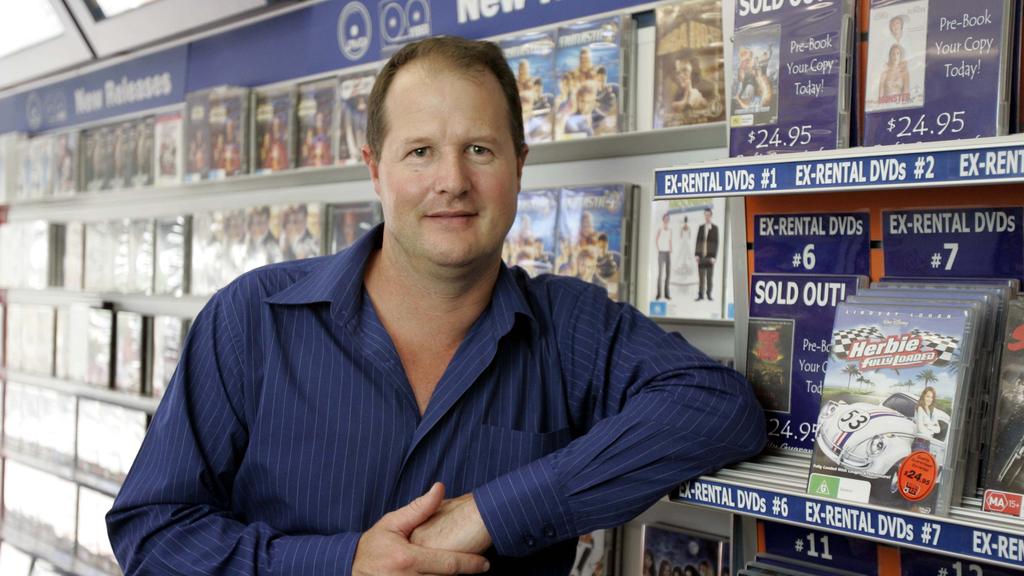
Former Video Ezy managing director Paul Uniacke.
In February 2007, Video Ezy acquired one of its biggest competitors – Blockbuster – at least in the Australian market.
At the time, Blockbuster had 29 company-operated and 341 franchisee stores across the country, all of which Video Ezy had now been granted the master franchise rights to.
During the 2000s and early 2010s, piracy and downloads were seen as a threat to Video Ezy’s business model.
At least, by seemingly everyone but the company’s then managing director Paul Uniacke.
“[Piracy] is no more of an issue today than it was two years ago,” Mr Uniacke said in a 2012 interview.
In response to YouTube launching its movie rental service in Australia, Mr Uniacke said “Download is where it will go in the future”.
“But we will also have the brands that can take us into that download space in time as well,” he said.
MORE: Hansel and Gretel transformation set too woo buyers
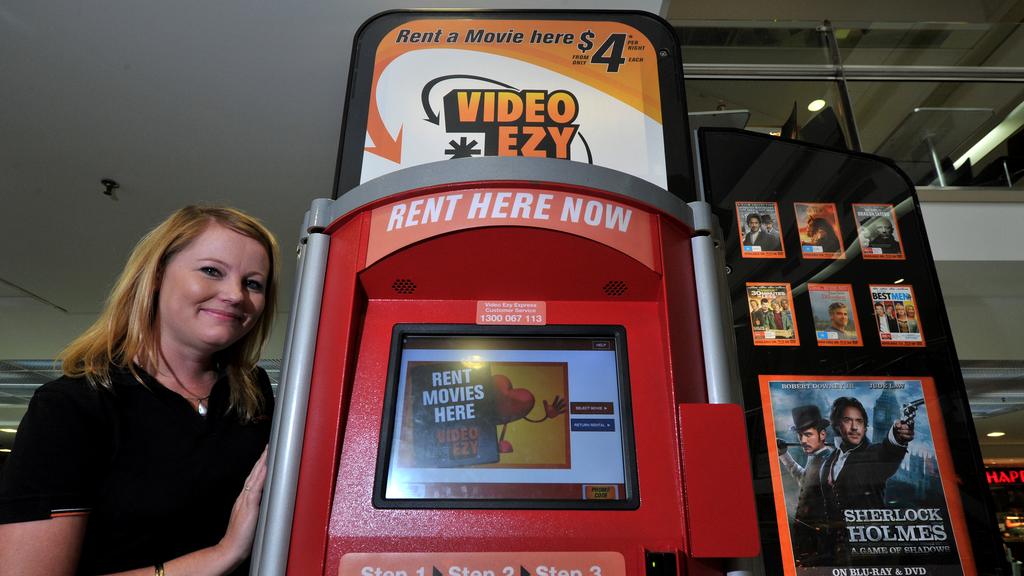
One of Video Ezy’s DVD rental kiosks.
At the time, Mr Uniacke had placed his chips in the 120 Video Ezy and Blockbuster-branded DVD kiosks that had rolled out across the country at the time, a figure which would soon grow.
“If [owners don’t diversify] they will die,” Mr Uniacke said.
“If you just want to maintain a bricks and mortar rental store and you think that’s where your future is, good luck.”
MORE: Valentine Holmes set for mega payday as NRL season nears
The rise of streaming

Streaming became a major disrupter to video renting. Picture: iStock
By 2015, Netflix was no longer a spritely subscription start-up, but a force in the media landscape.
Within three months upon its launch in Australia in March 2015, it gained over 1m users, a figure that almost tripled over the next year.
In 2020, market research found Australia to be the most highly-penetrated Netflix market in the world and in the first half of 2024, Netflix was used by 67 per cent of Aussie adults.
The late 2010s and early 2020s saw the persistent emergence of new streaming offerings in Netflix’s path, from companies like Disney, Apple and Amazon.
MORE: Bank slammed for tone deaf rates message
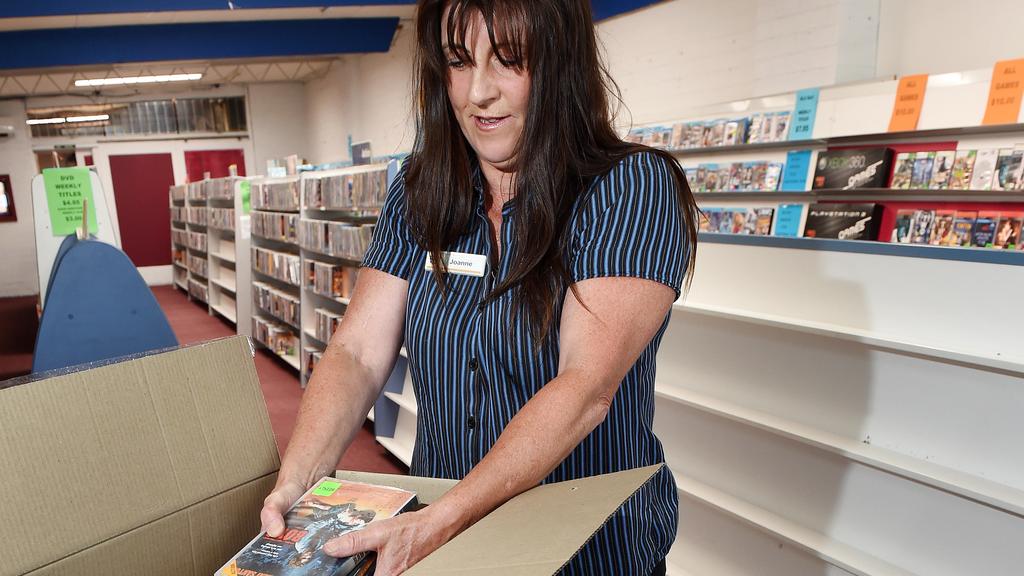
Closing up shop at Video Ezy in Boronia, VIC. Picture: Steve Tanner
Critics argued that, like the DVD collection picking up dust in people’s cupboards, Video Ezy had started to become more of a novelty than a necessity.
By the end of 2018 there were still 750 video rental stores in total across Australia, and a 2019 report claims that by April that year there were fewer than 40.
While streaming did significant damage to the franchise, it was actually not the final killing blow for Video Ezy.
That would come in 2020.
MORE: Nine’s $30k MAFS deal has shock Kyle, Albo link
The end
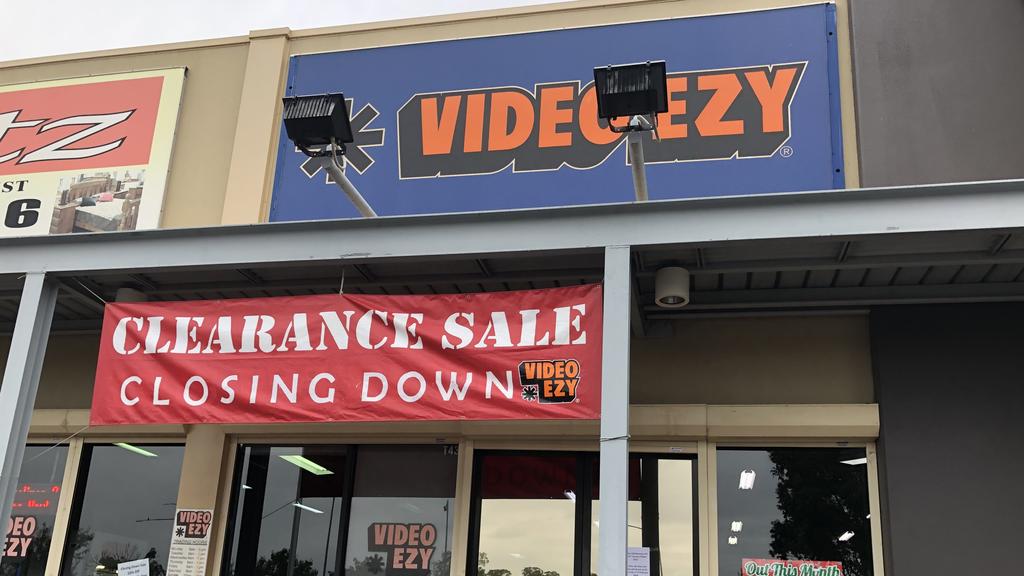
Video Ezy in Mt Druitt, NSW, closed down after more than 30 years in business. Picture: Heath Parkes-Hupton
The onset of COVID-19 was, for a multitude of reasons, the nail in the coffin for Video Ezy.
The lack of Hollywood blockbuster movies released during the time, combined with pandemic protocols, was enough to force all of the franchise’s kiosks to close.
In a 2021 interview with The Courier Mail, the last Video Ezy manager in Logan, Mic Noble, said COVID-19 had affected the industry more than Netflix, because new movies were not being produced or released.
“Netflix never worried Blockbuster and later Video Ezy because we got all the new releases two weeks before everyone else so it worked well,” Mr Noble said.
“When Covid started there were not that many blockbusters coming out of Hollywood on a weekly basis so many people turned to Netflix, Stan, Prime and now Binge.”
Operations ceased at Video Ezy’s surviving kiosks in March 2021 as their operating company, Evolve Entertainment, went into liquidation.
The Video Ezy name was deregistered on January 30, 2024, wrapping up the 41 year story of an Australian cultural icon.