The rise and fall of Toys ‘R’ Us: Inside the collapse of a toy empire

For generations of Australians, the very mention of ‘Toys ‘R’ Us’ conjures a kaleidoscope of childhood dreams.
The sprawling aisles, the dizzying array of every toy imaginable, the sheer promise of discovery – it was a magical kingdom where imagination reigned supreme.
But today, that kingdom – which once consisted of around 44 physical Aussie stores – is a ghost.
The once-vibrant big-box stores, where countless children once begged for the latest gadget or doll, now stand as stark reminders of a retail era long past.
But this isn’t just a story about a toy shop; it’s a cautionary tale of how the digital revolution, spearheaded by giants like Amazon, fundamentally reshaped Australia’s property landscape, leaving behind a trail of empty retail spaces and a lingering question: what happens to these colossal monuments to a bygone era?
From bicycle shop to big-box behemoth: The birth of a toy empire
The Toys ‘R’ Us phenomenon began in 1948 with Charles Lazarus, a visionary who returned from World War II with a hunch about the impending baby boom.
He started by selling baby furniture from his father’s bicycle repair shop, but his ambition quickly grew.
MORE NEWS
‘Costly, but worth it’: Aus’s forgotten flying billboard
The luxury reef resort Australia forgot about
The Aus city that cost millions – then vanished
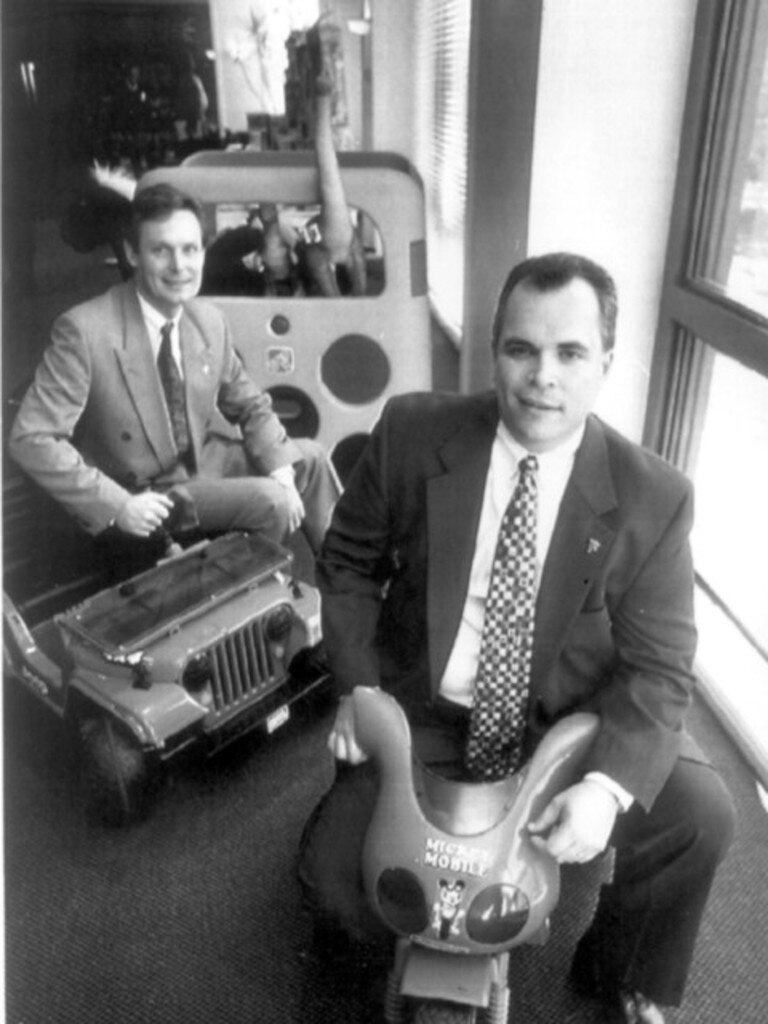
Charles Lazarus and Carl Olsen in 1993.
By 1957, he had rebranded as Toys ‘R’ Us, pioneering the “big-box” toy store concept – a supermarket for toys.
These stores were orders of magnitude larger than anything seen before, crammed with thousands of different toys.
MORE NEWS: The Aus town no one wants to live in
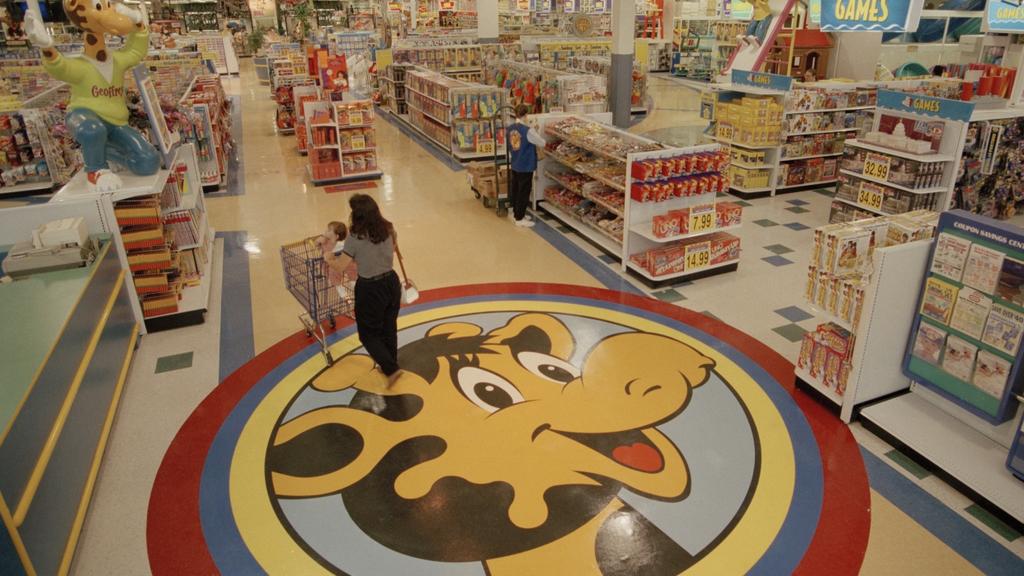
A shopper pushes her cart through a newly designed Toys “R” Us store in 1996.
“Everyone I talked to said they were going to go home, get married, have children and live the American dream,” Lazarus told Entrepreneur in 2008.
“I decided that I would open a store in my father’s bicycle-repair shop. But instead of selling bikes, I would sell cribs, carriages, strollers, high chairs – everything for the baby. My instincts told me the timing was right.”
The Golden Age: How Toys ‘R’ Us became an icon and retail juggernaut
This innovative approach made Toys ‘R’ Us a “category killer,” a retail behemoth that dominated the toy industry, driving smaller mom ‘n’ pop shops and even department stores out of business.
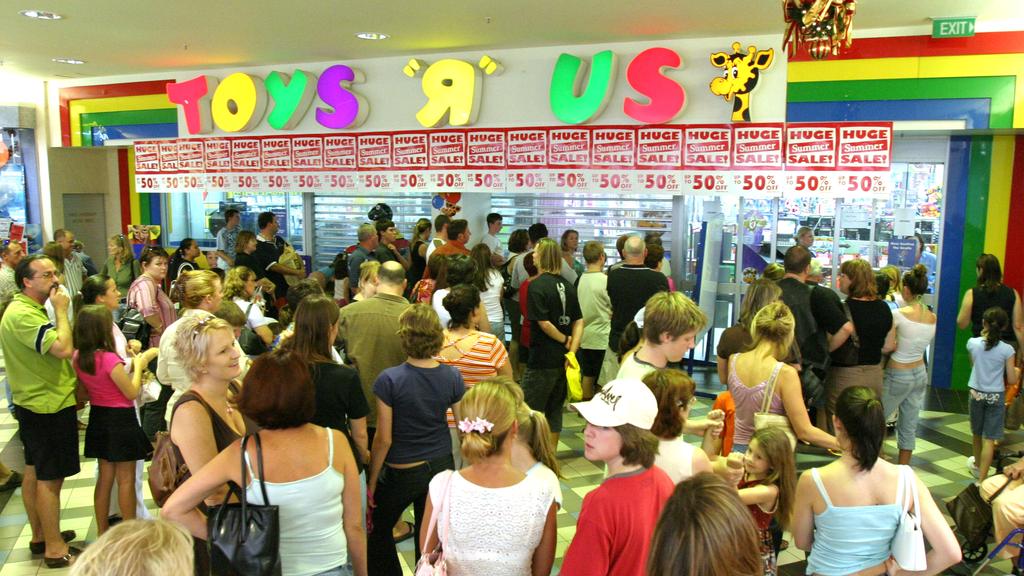
Shoppers are rushing to secure last minute deals before Christmas.
With its iconic mascot, Geoffrey the giraffe, and a catchy jingle that declared “I don’t wanna grow up, I’m a Toys ‘R’ Us kid,” the brand became synonymous with childhood.
At its zenith, the company, which went public in 1978, sold 18,000 different toys across 1,450 locations globally, controlling a staggering 25 per cent of the world’s toy market.
How a digital misstep paved the way for Amazon’s rise
However, the very model that brought Toys ‘R’ Us unparalleled success ultimately became its Achilles’ heel in the digital age.
As e-commerce began to emerge in the late 1990s, the company struggled.
Its initial foray into online retail was plagued by issues, including a notorious failure to deliver Christmas orders on time in the US, leading to widespread consumer backlash.
Then came the fateful decision that would irrevocably alter its trajectory.
In 2000, Toys ‘R’ Us signed a 10-year deal with Amazon, entrusting the then-nascent online platform with running its e-commerce operations.
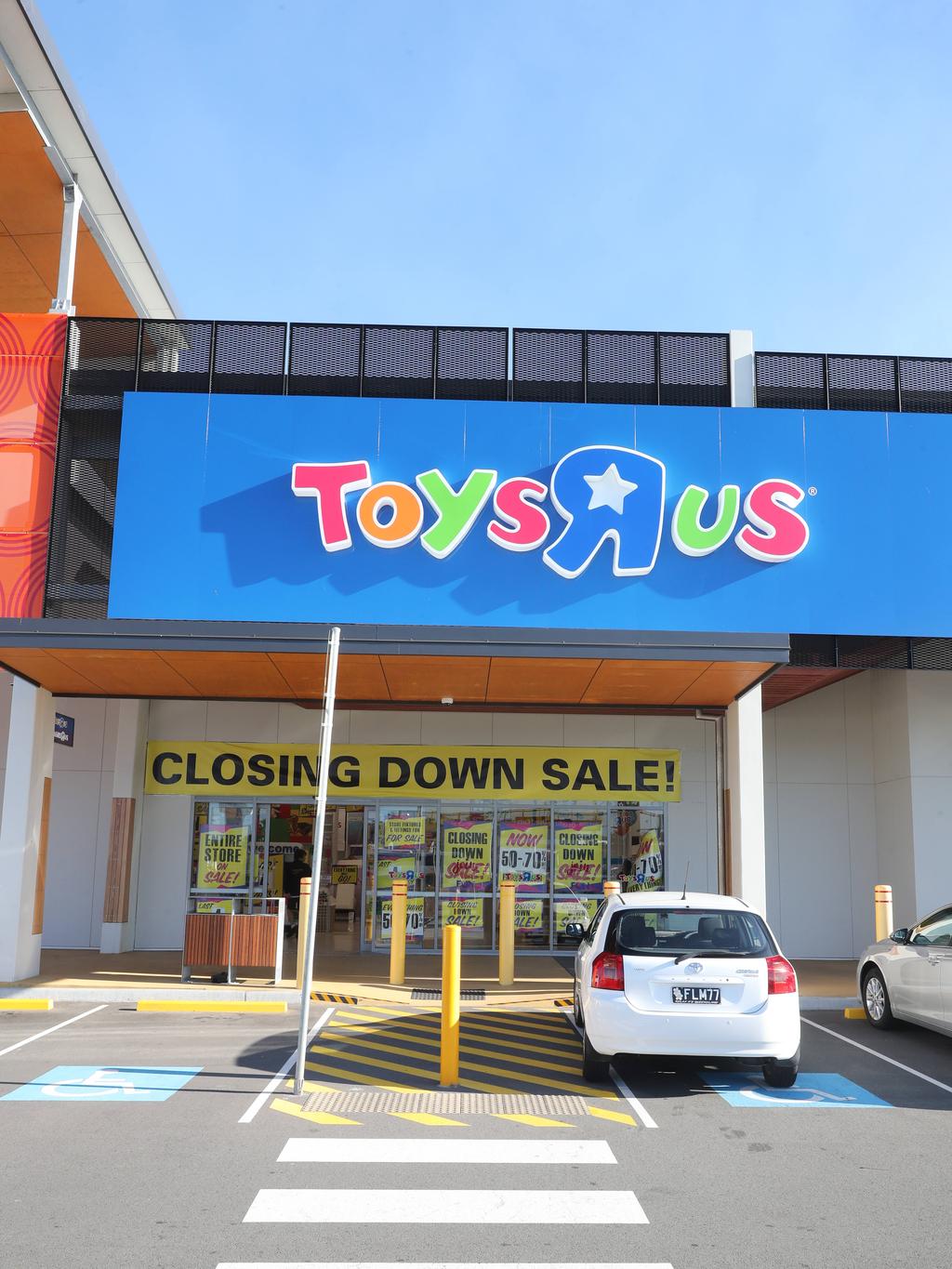
The closing down sale of Robina’s Toys R Us. Photo by Richard Gosling
In exchange for exclusive rights to sell its toys and baby products online, Toys ‘R’ Us inadvertently handed over invaluable data to Amazon.
Retail analyst Scott Kilmartin highlights the profound impact of this partnership: “It paid Amazon to run its online business but this allowed Amazon to learn a lot about selling toys – a segment that remains a large part of its marketplace today,” he told The New Daily. “Amazon had been floundering with the consumer perception that it only sells books. It couldn’t believe its luck.
“Data wasn’t big at the time and Toys ‘R’ Us didn’t know what they were giving away.”
Empty aisles: The Australian stores that couldn’t compete
This strategic misstep, coupled with a general reluctance to adapt to the rapidly evolving digital landscape, proved devastating for Toys ‘R’ Us in Australia.
While the brand once boasted around 44 physical stores across the country, these grand temples of play slowly succumbed to the relentless march of online retail.
Dr Louise Grimmer, a retail expert at the University of Tasmania, notes that Toys ‘R’ Us, like many other traditional retailers, “was slow to invest in online.”
“They had difficulty meeting fast shipping times which consumers expect to be the same-day or next-day delivery in many cases,” she told The New Daily.
“It’s sad because there’s been significant growth in online toy sales and Toys ‘R’ Us obviously missed a great opportunity here.”
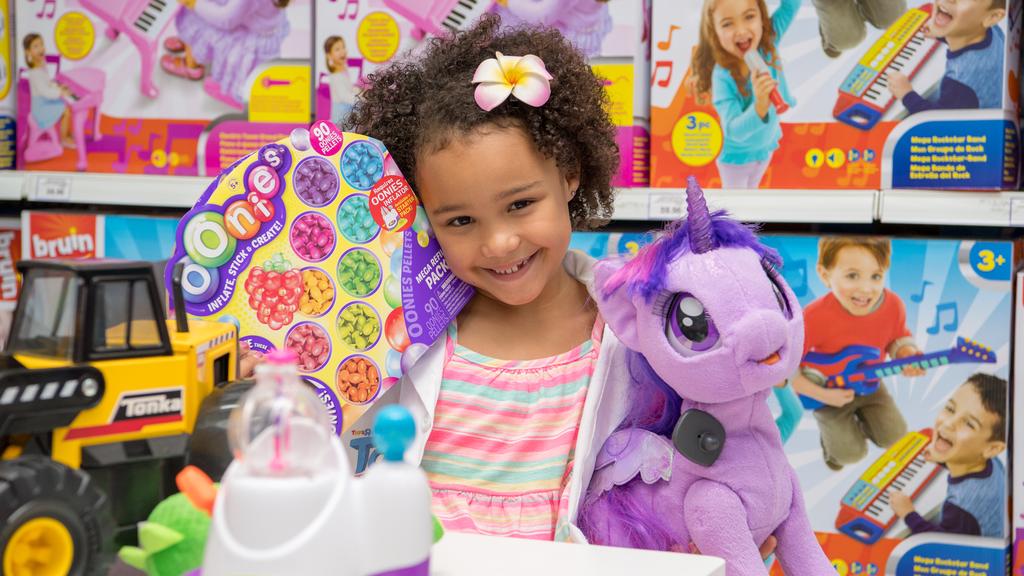
Toys R Us toy tester, Dayleni Drike Sanchez in 2018. Picture: Rafal Kontrym).
The consequences were stark.
In 2018, the Australian arm of Toys ‘R’ Us collapsed, leading to the closure of all its physical stores and the loss of approximately 700 jobs.
The once-bustling shopping centre fixtures became vacant shells, silent monuments to a bygone era of brick-and-mortar dominance.
The online-only legacy and second collapse
Fast forward to June 2025, and news.com.au reported that Toys ‘R’ Us ANZ had once again entered voluntary administration, its second in six years.
Despite a 2020 restructure where the ASX-listed Funtastic retailer acquired the Australian e-commerce website for Toys ‘R’ Us, Babies ‘R’ Us, and Mittonit, the company found itself unable to pursue a solvent recapitalisation plan.
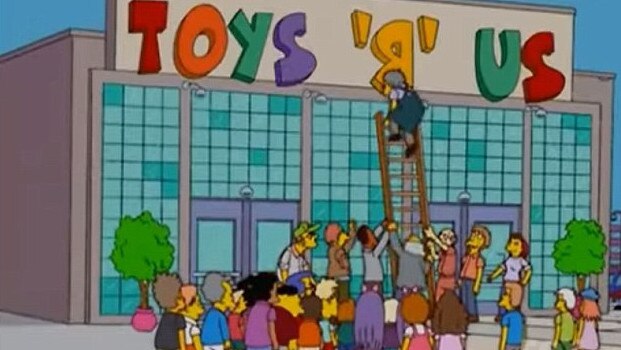
Did The Simpsons predict the demise of Toys R Us?
In a statement to the ASX, published at the time, Toys ‘R’ Us ANZ confirmed it was “or is likely to become, insolvent,” with BDO’s Luke Andrews and Duncan Clubb appointed to oversee the restructuring of the once-beloved toy store.
Today, Toys ‘R’ Us in Australia exists solely as an online store, a stark contrast to its former physical omnipresence.
The story serves as a powerful reminder of how quickly even the most dominant retail giants can fall when faced with disruptive innovation.