Super-sized trolley, undersized aisles: Woolies’ 215L cart collides with store design

Bigger baskets promise bigger shops – but many supermarkets and shopping centres weren’t built for carts this large, especially compact hub formats.
Woolworths has quietly added a 215‑litre trolley to just over 50 stores – larger than the 180‑litre standard and dwarfing the 90‑litre “small shop” model – as part of its recycled green‑plastic fleet.
Shoppers have delivered mixed reviews, but the sharper tension sits with commercial property: aisle geometry, checkout corrals and mall circulation in many locations were engineered around smaller footprints.
“We’ve designed different sized versions of these trolleys to help customers with different types of shops,” a Woolworths spokesperson told news.com.au.
“Our smallest 90‑litre version is great for people doing smaller shops, and slides into our self‑service checkout spaces, while our 180‑litre version is designed for bigger shops.”
MORE NEWS
Barbeques Galore collapses, staff in limbo
Costco targets 20 new stores in Aussie price push
$400m in debt: Pharmacy giant collapses
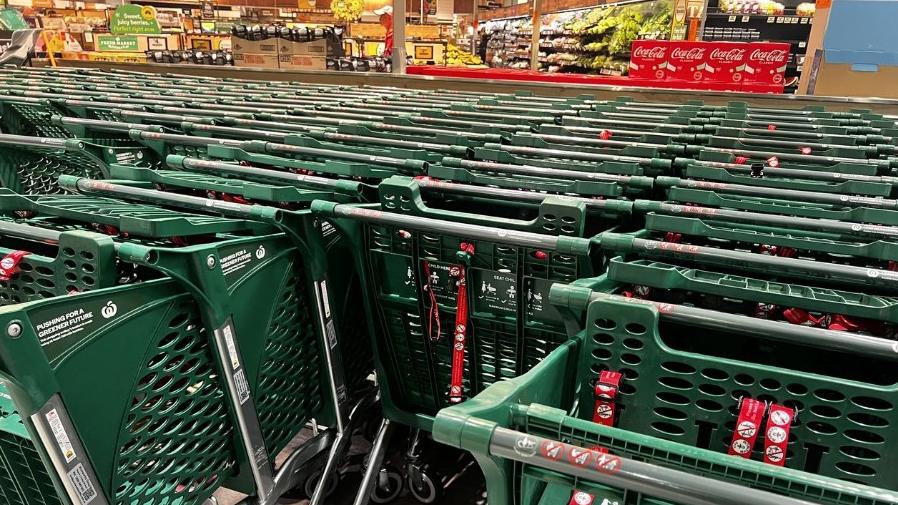
Woolworths has rolled out a number of new trolleys across its stores. Source: Nine News
The 215L unit adds seating for two toddlers and materially increases length and wheelbase. That matters for store planning.
Longer turning circles at aisle ends and heavier mass at speed push many existing floor plans to their limits, especially where endcaps, dump bins and online pick trolleys already pinch clearances.
Small‑format hub stores are the pressure point
Woolworths’ compact hub and Metro‑style shops in CBDs and dense suburbs prioritise sellable floor area over circulation, with tighter aisles, shallow end bays and basket‑heavy self‑serve. In those footprints, a super-sized trolley is a poor fit – difficult to manoeuvre, prone to blocking entry and exit points and often incompatible with existing self‑serve gate widths and queue lanes.
Shoppers are already calling out the handling and space issues.
“I saw those, they have the wheelbase of a Ford Falcon wagon,” one shopper remarked on Reddit.
“Might as well be a fkn boat,” said another, while a third commented: “As someone with a back injury, I ditched it and grabbed the shallow one that’s half the weight.”
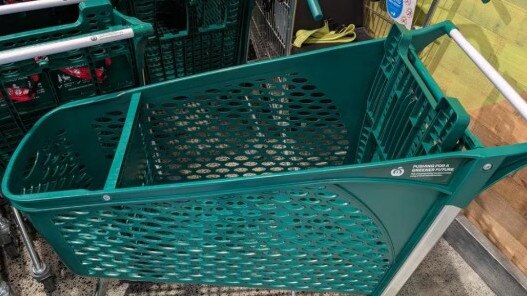
While made from recycled material, the size of the trolleys has been met with dismay by shoppers. Source: Reddit.
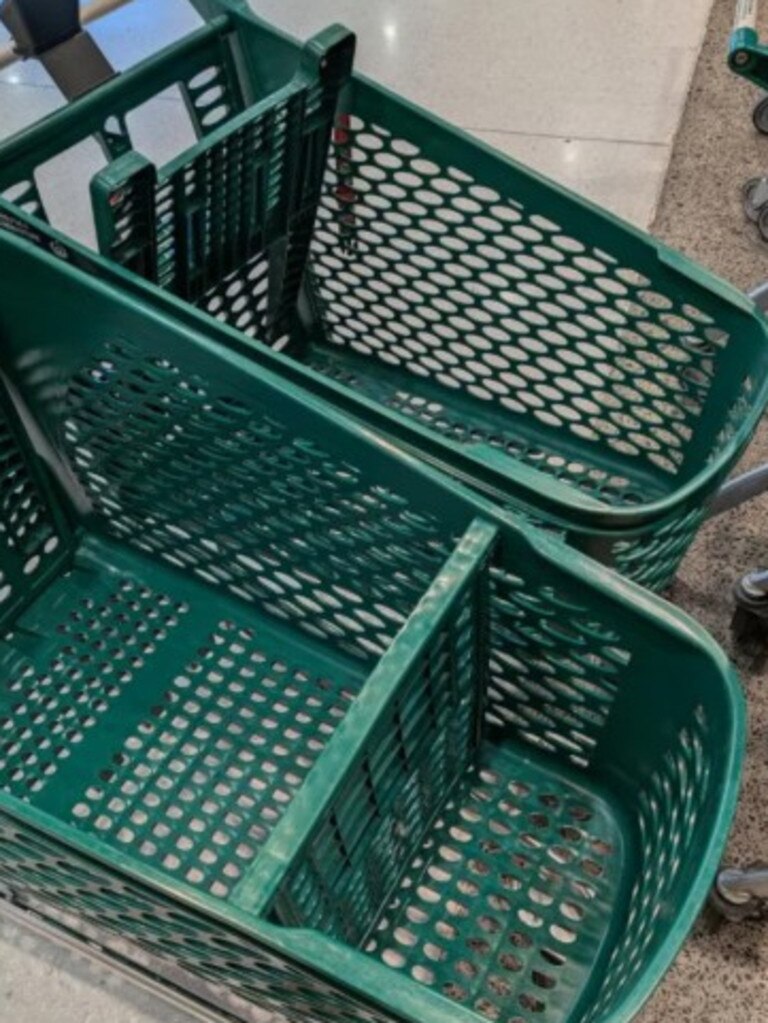
While the new size adds 35 litres of extra space for groceries, customer feedback has been mixed. Source: Reddit.
Some questioned how the trolley would fare in “already cramped aisles,” noting “huge online order carts clogging them.”
Woolworths counters that many customers report the plastic units are easier to handle, and says it’s listening.
Check-outs and self‑serves are the next pinch point
By Woolworths’ own description, the 90L trolley “slides into our self‑service checkout spaces”.
The 215L – with greater length and turning radius – can slow unload/reload cycles and jam tighter corral geometry, increasing spill‑back into common areas.
For landlords, that means queue management and common‑area lines may need re‑marking.
For tenants, gondola spacing and endcap plans may need re‑work to preserve flow.
Travelators and narrow mall entries in older centres could also become chokepoints as heavier trolleys lengthen boarding times and reduce throughput, particularly when paired with prams and mobility aids.
The size of the new trolleys is also raising questions about how to best manage floor space.
Back‑of‑house corridors and dock lifts – already busier with e‑commerce staging – face the same constraints.
While the new trolleys align with sustainability goals and Woolworth’s new integrate Scan&Go technology, the latest innovation must be integrated within viable physical parameters.
The arrival of these mega trolleys isn’t just a minor update; it’s a clear signal that the physical infrastructure of our retail landscape needs to catch up.