Aldi updates select stores with new security tech

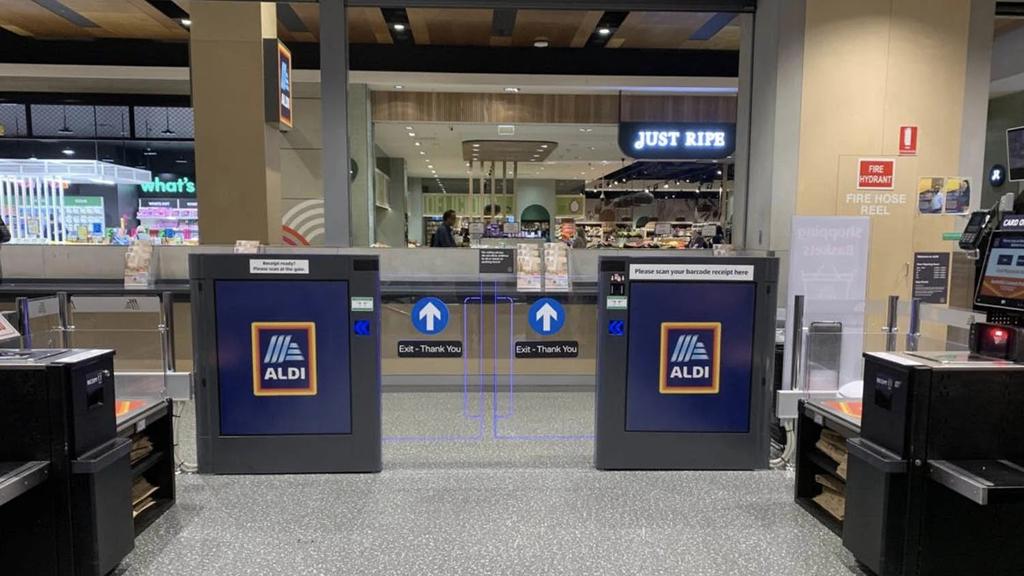
Aldi is testing new electronic gates in select stores across Australia. Picture: Supplied
Aussie shoppers have ridiculed new security measures being tested in select Aldi supermarkets after the technology appeared unreliable, trapping customers inside stores.
Aldi has joined other major retailers trialling increased security technology by adding electronic gates at a handful of stores in Victoria.
The move sees Aldi join the likes of Coles, Woolworths, Kmart and Big W as Aussie retailers grapple with increased theft off the back of the ballooning cost of living crisis.
It is a growing problem right across Australia’s commercial property sector because mounting losses from theft are putting more and more businesses at risk of closure in a market already under threat from the rise of cheap digital marketplaces like Temu and Shein.
MORE: Shock reason Costco, Aldi reject big Aus city
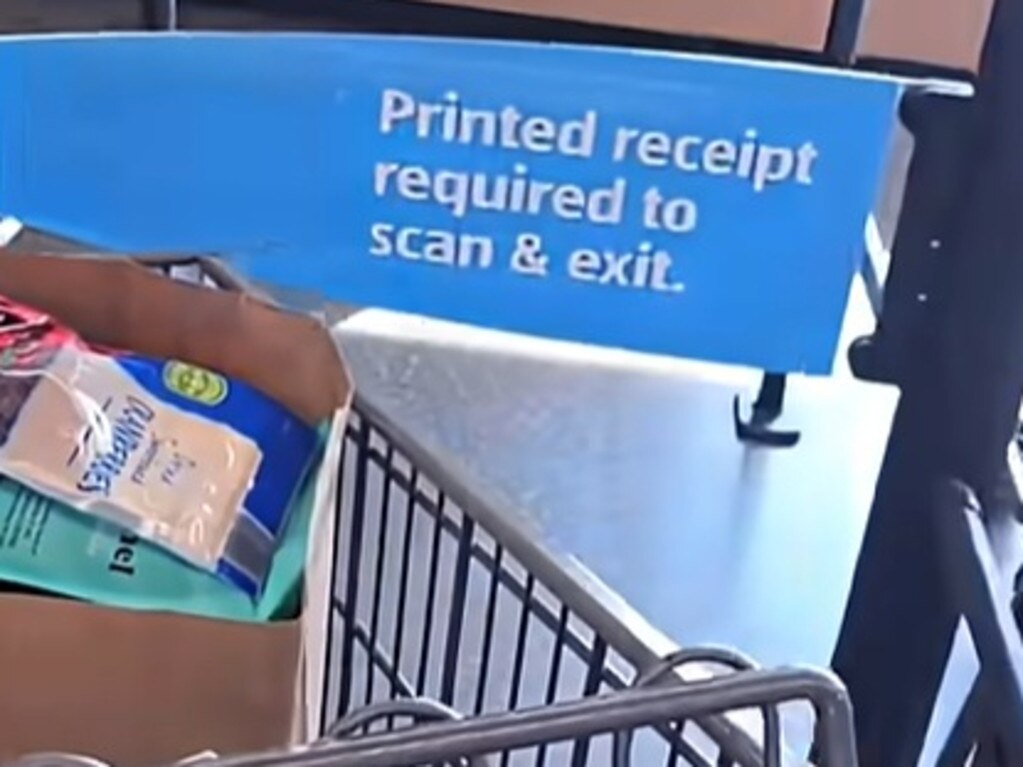
Aldi is upping its security game in select stores.
MORE: Aus giant’s new trolleys about to change everything
Shop closures as a result of ongoing theft and revenue loss can have a cascading effect on local communities, reducing foot traffic, depressing nearby property values, and creating a sense of economic decline.
While electronic gates aren’t new, the Aldi versions come with one distinct difference to those implemented by their retail rivals: The German chain requires customers to scan their receipts before allowing people to exit.
It is a feature that left some shoppers at one of the trial sites – Victoria’s Northland store – frustrated and trapped when the receipt scanner repeatedly failed.
One Melbourne shopper said he was forced to wait in a line of shoppers who couldn’t leave when the receipt scanner didn’t work properly.
“These things scan worse than the original Myki reader, so you’re kinda stuck in the store till they work,” he told Yahoo.
RETAIL THEFT ON THE RISE
A recent study conducted by Griffith University has shed light on the mounting challenges faced by retailers in Australia and New Zealand, with theft-related losses escalating significantly in the post-pandemic period.
The research highlighted a concerning trend, revealing retail crime had grown at a rate far exceeding revenue growth in the sector.
Between 2022 and 2024, losses in the retail industry surged by nearly 30 per cent, while retail revenue saw a comparatively modest increase of just over nine per cent during the same period.
MORE: Costco’s huge $110m plan for Aussie store
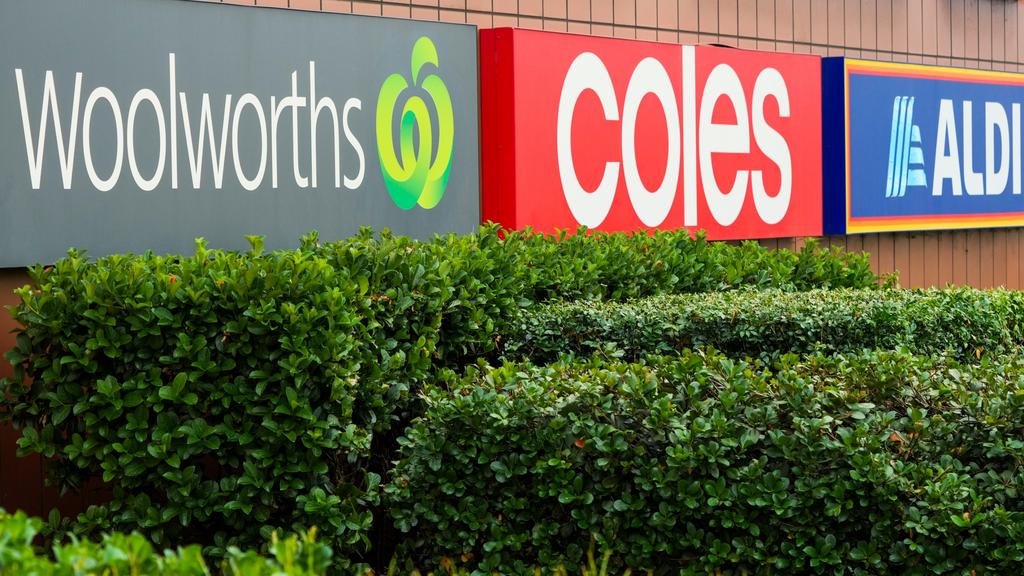
All the big retail chains are feeling the pinch of increased thefts. Picture: Getty Images
MORE: Temu, Shein busted: Kmart drops major plan
Overall losses after the introduction of self checkout has been reported between three to four per cent, compared to one per cent with traditional cashiers.
The disparity underscored the growing impact of losses in the retail sector, which is struggling to recover from the economic disruptions caused by the COVID-19 pandemic.
External theft was identified as the predominant contributor to retail losses, accounting for a staggering 71 per cent of the total losses in Australia.
SECURITY TECH ON THE RISE
Electronic gates aren’t the only security measures being implemented across Australia’s retail sector.
Coles is testing a raft of new security measures to prevent product theft, including locked cabinets and weight-measuring shelves.
The Aussie giant is testing the new technologies at Melbourne’s Highpoint West store in light of Victoria’s skyrocketing theft and assault incidents at retail outlets.
High-value supermarket items like baby formula, meat and cosmetics are where Coles is using the new measures.
Weight-measuring shelves at the test site now house tins of baby formula where an alarm is triggered if too many items are removed at once, alerting staff to investigate.
Meanwhile, cosmetics at Coles Highpoint West are now stored in locked cabinets which staff can open remotely after viewing CCTV of the appropriate aisle.
The two new test measures join beefed up security already in place at many Coles stores, including smart gates at check-outs to stop customers leaving if they haven’t paid for their items, and voice messages playing in stores that remind customers they are under CCTV surveillance.