Will Australia’s retail property rally continue into 2026?
Property investors spent near-record amounts of money for Australian shopping centres and other retail real estate last year despite long-running concerns around e-commerce, but the question now is whether the shopping spree continues into 2026.
More than $11 billion worth of retail property changed hands in Australia in 2025, the second highest year on record, according to preliminary JLL data.
While online shopping once cooled enthusiasm for bricks-and-mortar retail property, strong consumer spending, busy centres and a lack of new supply are boosting confidence in the asset class.
Household spending remains strong in Australia, rising 1% month-on-month in November last year, and increasing 6.3% compared to a year prior, according to the latest figures from the Australian Bureau of Statistics.
But the picture is mixed, with the latest Westpac–Melbourne Institute Consumer Sentiment Index showing Aussie consumer sentiment slipping 1.7% lower in January this year.
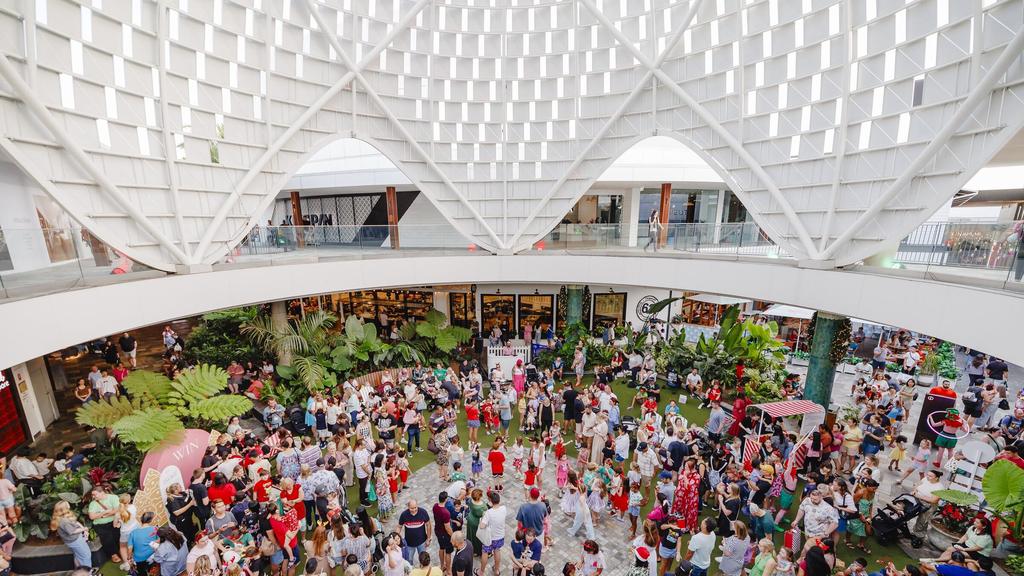
Dexus bought two 25% stakes in Brisbane’s Westfield Chermside shopping centre from Scentre Group in July and December last year, totalling about $1.3 billion. Picture: Supplied
The slip in confidence was driven by uncertainty surrounding higher-than-desired inflation and whether interest rates would hold steady or rise over the coming months.
David Mahood, senior executive for retail investments at JLL, said 2025 was a defining year for retail property.
“Positivity for retail property is continuing to grow globally and demand for Australian shopping centres continues to intensify with increasing demand from all capital sources,” Mr Mahood said.
“The 2026 outlook remains to be consistent with these themes, and we expect strong demand for prime, irreplaceable assets.”
Mega retail deals in 2025 included the $1.3 billion sale of a half stake in Brisbane’s Westfield Chermside shopping centre via two deals in July and December, and the $900 million sale of Erina Fair shopping centre on the NSW Central Coast.
Queensland’s south east also saw the sale of the Logan Hyperdome to MA Financial in Q4 – arranged by CBRE – in a $678 million deal, the largest retail acquisition to-date by the asset manager.

JLL’s David Mahood says there will be strong demand for prime, irreplaceable assets in 2026. Picture: Supplied
Experts say institutional heavyweights and private buyers are both back in buying mode, with the race for top-quality retail real estate heating up fast.
Luke Etherington, Cushman & Wakefield’s managing director for Victoria and head of investment sales in Australia, said private and institutional investors would be on the hunt for retail real estate in 2026.
“Private capital will remain active, but institutional groups, both domestic and offshore, are now firmly back in acquisition mode as Australia’s yield premium widens and retail fundamentals strengthen,” Mr Etherington said.
“Well-located centres with sustainable sales growth and diversified income streams will attract competitive bidding and further yield compression.
“We also anticipate heightened portfolio activity as groups reposition, recycle capital and recapitalise ahead of the next cycle.”
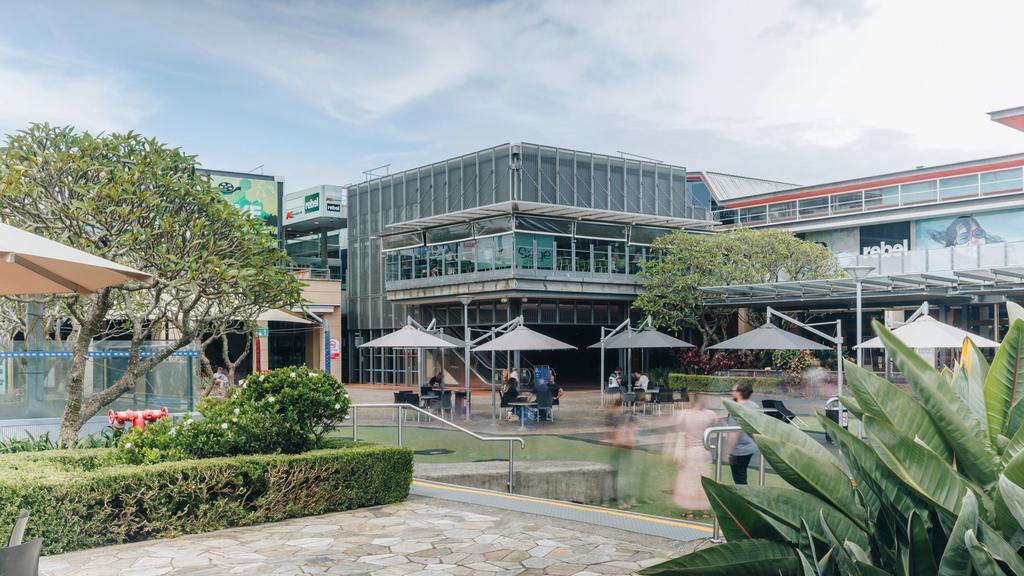
Fawkner Property struck a deal to buy the Erina Fair shopping centre in NSW from Lendlease last year. Picture: Supplied
Shopping centre and large format retail (LFR) yields continued to compress during the third quarter of 2025, according to recent CBRE data. Regional centres compressed by nine basis points quarter-on-quarter, while neighbourhood and LFR centres compressed by six basis points.
Yields compare a property’s income to its price, and when they compress, it usually means prices are rising as investors accept lower returns.
Face rents, which don’t take discounts and incentives into account, grew across all sectors in Q3 except for secondary CBD locations, with regional centres recording the highest growth of 1.3% quarter-on-quarter.
Daniel Sutton, director and head of asset management at Raine & Horne Commercial Retail Services, said the solid retail leasing activity seen in 2025 was tipped to continue into this year.
“High development costs and ongoing planning constraints are limiting new retail supply, which is helping underpin rental price growth across established retail assets,” Mr Sutton said.
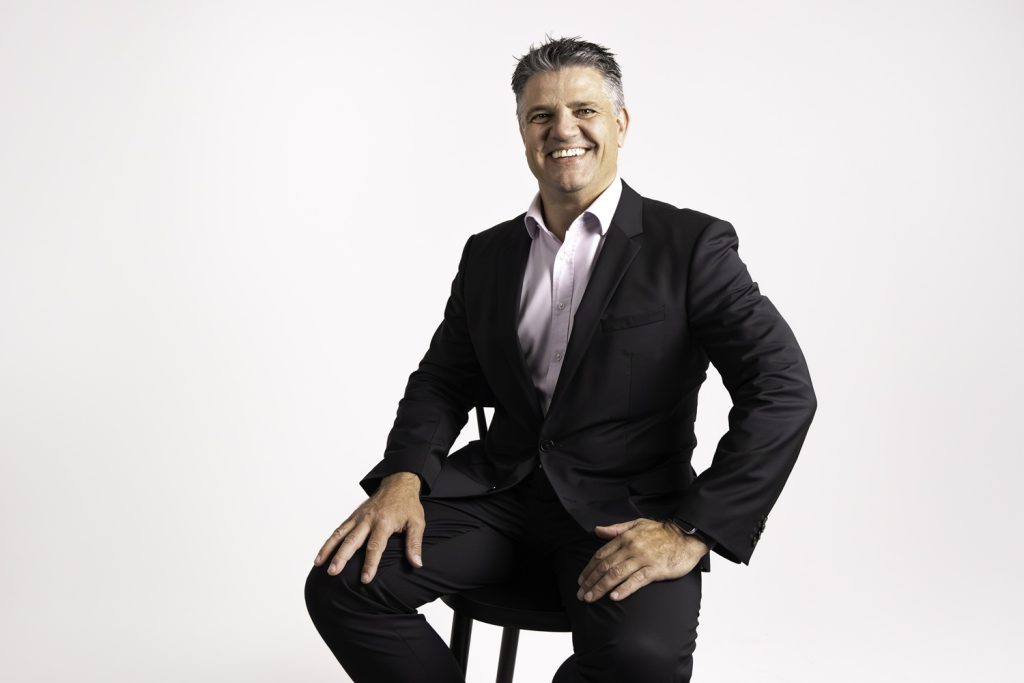
Raine & Horne Commercial’s Daniel Sutton says high development costs and ongoing planning constraints are limiting new retail supply. Picture: Supplied
“Population growth, particularly in areas with strong demand from younger consumers, is expected to see retail sales growth in 2026 for well-positioned, quality retailers, contributing to rental growth and lower vacancy rates.”
Mr Mahood pointed to listed real estate investment trusts (REITs), which had reported successive quarters of positive leasing spreads and record occupancy levels for their shopping centres, reflecting the improving retail leasing conditions in Australia.
“These aspects combined with a relatively strong consumer spending, despite the changing outlook for interest rates, has provided a platform for growth – both for existing tenants looking to expand and new entrant retailers to the physical retailing space like Adore Beauty in 2025,” he said.
Daniel Radle, Cushman & Wakefield’s national head of retail leasing and management, Australia and New Zealand, said retail leasing enquiry levels had increased above pre-COVID benchmarks for neighbourhood, prime convenience and other retail asset classes.
“We expect leasing momentum to accelerate in 2026, with most markets reaching peak occupancy and rents pushing upward,” Mr Radle said.
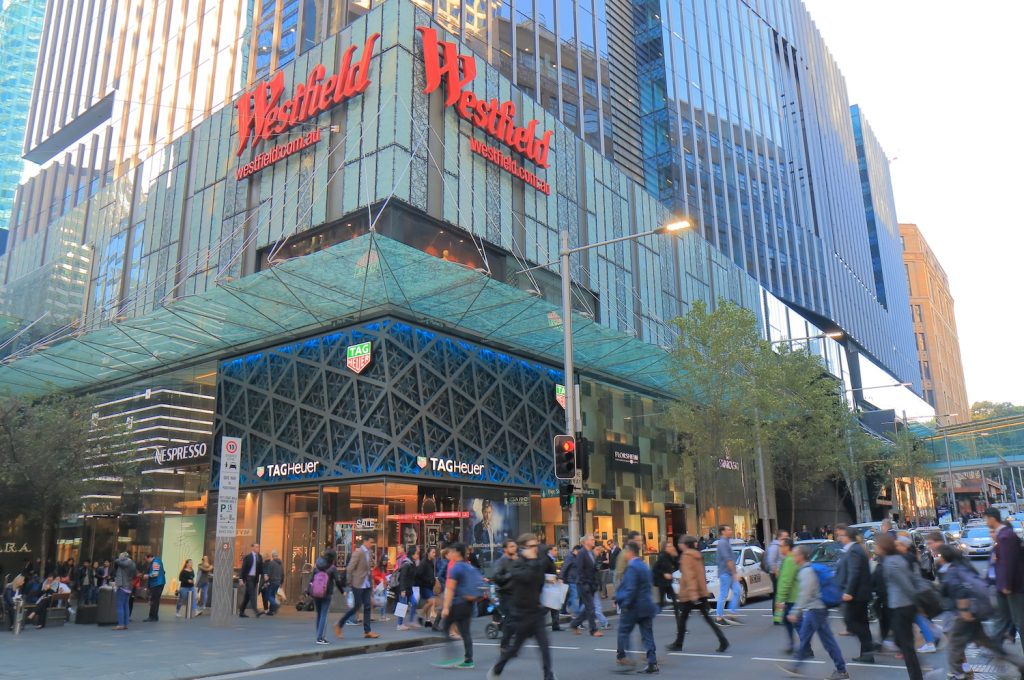
More retail deals are on the way in 2026. Australian Retirement Trust is expected to settle on its purchase of a 19.9% interest in Westfield Sydney from Scentre Group for $864 million in February. Picture: Getty
“Brand expansions will be driven by experiential retail, health and wellness, and [food and beverage] operators seeking scalable footprints.”
While property experts are optimistic about the future of retail real estate, the threat of online shopping to physical retail remains.
Since March 2023, the country’s e-commerce penetration rate has been trending upwards, and stood at 14.6% of total retail trade in July last year, according to NAB.