Why investors are buying industrial land and not building warehouses

Investors have been spending big on warehouses to ride the online shopping boom for years, but some are splashing cash on the car parks and storage yards surrounding these hot properties with no plans to build up.
The move to buy industrial land and not build warehouses on it might seem counterintuitive given their popularity, but some investors are finding a niche that comes with its own risks and rewards.
New Colliers research has revealed that investors have spent more than $1.5 billion on industrial outdoor storage (IOS) real estate across Australia since 2023.
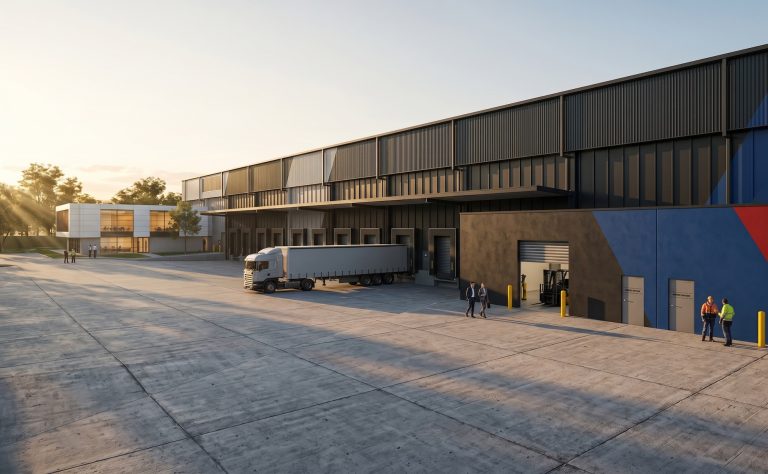
IOS sites are industrial-zoned properties where the surrounding yards, not the buildings, make money by giving businesses space to park trucks and trailers, store containers and stash construction gear and materials.
The IOS space has been dominated by smaller private investors, but bigger players have been paying more attention to it in recent years.

Source: Colliers
Institutional buyers accounted for approximately 56% of IOS transactions above $10 million over the past three years, with players such as Realterm, Cosgrove, Kinkora Investments, Goodman and Charter Hall leading the way, according to Colliers.
The minor asset class has been getting more popular due to the scarcity of undeveloped industrial land, increasing occupier demand, and financial incentives.
Gavin Bishop, managing director of industrial and logistics at Colliers, said IOS was becoming an increasingly important part of Australia’s industrial property market.
“These assets support the everyday movement of goods, vehicles and materials, yet suitable infill sites are becoming progressively harder to replace,” Mr Bishop said.
“That combination of operational necessity and land scarcity is bringing IOS firmly into the institutional investment conversation.”

IOS gives businesses space to park trucks and trailers, store containers and stash construction gear and materials. Picture: Getty
Land scarcity has been a key driver, with less than one-quarter of industrial-zoned land across Australia’s mainland capital cities remaining undeveloped.
It comes as only 19% of undeveloped land across Sydney, Melbourne and Brisbane’s key markets were located in infill areas.
US-based IOS investor Realterm, which holds about $20 billion of assets globally, has been buying properties in Sydney since 2024 and recently fully leased out a new 23,000-square-metre site in Chipping Norton in a sign of the demand for this niche.
“There is a clear gap in the market for institutional-grade hardstand, particularly with true container-rated capability, and this outcome reinforces the need for more of this product across Sydney,” said Kathleen Legg-Bagg, asset manager at Realterm.
On the demand side, infrastructure construction, data centre development and growing online retail activity has been boosting demand for these outdoor spaces on top of its normal transport and logistics business user base.

Source: DC Byte, Colliers
More than 130,000 sqm of hardstand – paved space designed to withstand heavy loads – was leased to data centre operators and contractors in the first half of 2026, Colliers reported.
Additionally, experts argued IOS offered investors a greater share of their promised returns compared to established prime and secondary industrial properties.
Colliers estimated IOS assets delivered a 6.22% headline yield, narrowing to a 5.29% effective yield after incentives and capital expenditure, offering a 93-basis point spread.
This compared with a 135 basis point spread for prime industrial assets and 210 basis points for secondary stock, allowing IOS investors to retain a much greater proportion of their returns.
But Anne Flaherty, senior economist at realcommercial.com.au, said much of the demand underpinning IOS was tied to specific projects and industries, which wouldn’t necessarily last forever.

Realterm recently fully leased out this new 23,000-square-metre site in Chipping Norton, Sydney. Source: Supplied
“Demand for IOS is supported by major logistics and construction hubs and projects,” she said.
“In situations where demand is coming from a major infrastructure project, this could create future risk for the site once that project is completed.
“Changes to logistics networks could also alter demand for IOS. Given the space requirements for these sites, understanding zoning and the potential for future redevelopment is also important when assessing the asset.”
IOS investment remains a fraction of the $11.9 billion that investors spent on industrial real estate in Australia in 2025 alone, but the institutional interest flowing into the asset class suggests it may carve out a bigger share in years to come.
The latest commercial property news
Get the latest news and insights straight to you.